How to Grow Chives: An Easy Perennial Herb
Chives return each spring with very little work. Learn three ways to start a clump, where to plant it, how to cut the leaves so they regrow, and when to divide.
Some herbs need replanting each spring and fussing over all summer. Chives are not one of them. Plant a clump once, in a reasonable spot, and it comes back year after year with very little asked of you.
That makes chives a good first perennial for a new herb bed. This guide explains how to grow chives from seed, a nursery plant or a piece of a friend’s clump, and how to cut them so the plant stays thick and tender.
What kind of plant chives are
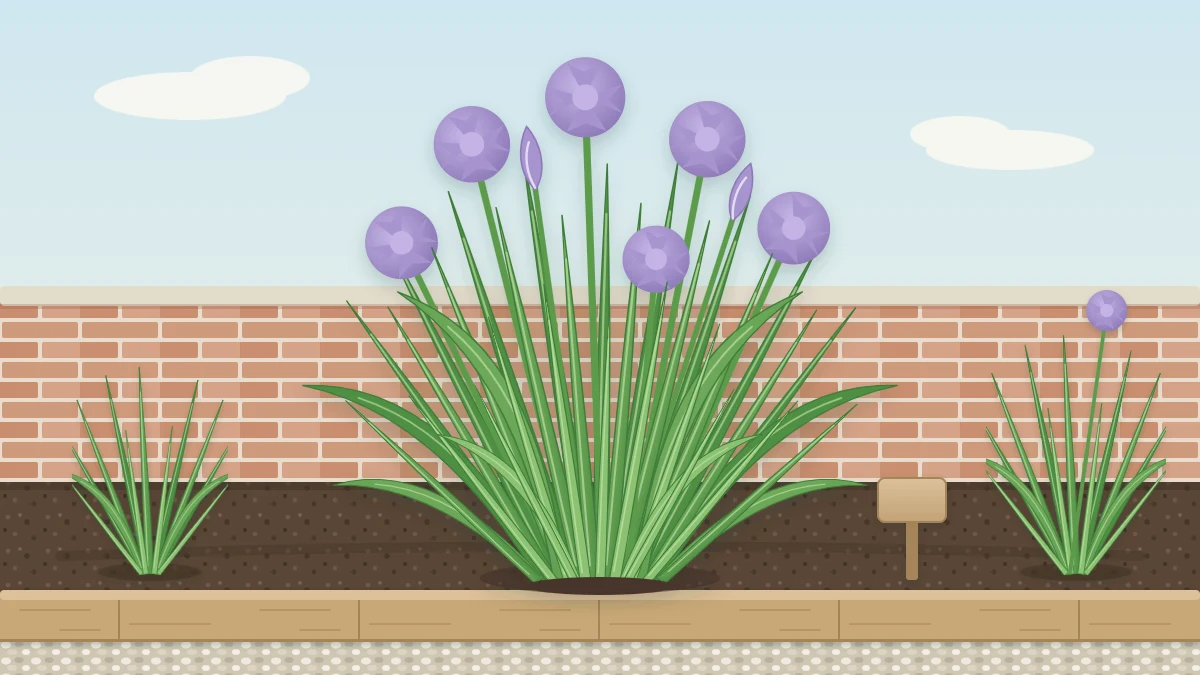
Chives (Allium schoenoprasum) are a clump-forming, bulbous perennial in the onion family. The NC State Extension profile for chives lists them for USDA zones 4 to 8 and notes that they grow in average, well-drained soil in full sun to part shade.
- Life cycle: perennial. The same clump returns each spring.
- Light: full sun to part shade.
- Soil: average and well-drained. Rich soil is not required.
- Habit: a tidy clump of slender, hollow leaves that slowly widens.
Zone listings are a rough guide, not a promise, and local conditions matter. If you are unsure how perennials differ from herbs you replant yearly, see the guide to annual vs perennial herbs.
Three ways to start
You can begin with seed, a nursery plant or a division. All three end with the same plant; they differ mainly in how soon you can cut from it.
| Method | What to expect | Suits |
|---|---|---|
| Seed | Thin, grass-like seedlings that take a while to bulk up | Anyone who wants many plants cheaply |
| Nursery plant | A small clump you can plant right away | The quickest, simplest start |
| Division | A piece of an established clump that settles in fast | Gardeners with a friend who grows chives |
From seed
Sow according to the packet, either directly in the bed or in small pots to plant out later. Sow a pinch of seed together instead of single seeds, since chives look and grow best as a cluster. Keep the soil moist until the seedlings are up.
From a nursery plant or a division
Dig a hole as deep as the root ball, set the clump at the same depth it was growing, firm the soil and water it in. A division is planted the same way.
Choosing a spot
Chives are not fussy, but two things matter. The first is drainage. The small bulbs dislike sitting in waterlogged ground, so avoid low spots where puddles linger after rain.
The second is light. Full sun, meaning about six or more hours of direct sun, gives the sturdiest growth and the most flowers. Part shade is fine too, especially in gardens with hot summers.
Because the clump stays in place for years, put it somewhere it will not be dug up by accident: the edge of a bed, a corner of a raised bed or beside a path. Chives also do well in pots. Use potting mix and a container with drainage holes, and read growing herbs in containers for pot size and care.
Everyday care
An established clump needs little. Check the soil with a finger during dry spells and water when it feels dry below the surface. New plants and plants in pots need closer attention than a settled clump in the ground.
Keep weeds out of the clump, especially grasses, which are hard to tell apart from chive leaves once they grow in. A thin layer of mulch around the plant, not piled against it, makes that job easier.
In average garden soil, chives rarely need feeding. A little finished compost spread around the clump in spring is plenty.
How to harvest chives
Start cutting once the leaves are around 6 in (15 cm) tall. The method matters more than the timing: cut the leaves near the base, a little above the soil, instead of snipping off the tips.
A leaf with its tip trimmed does not regrow from the cut. It just browns at the end. A leaf cut near the base is replaced by a fresh one from below. So gather a small bundle from the outside of the clump and cut it low, leaving the rest standing.
- Take a section of the clump at a time, not the whole plant.
- Let a newly planted clump settle in and grow before you cut much from it.
- Use scissors or sharp snips for a clean cut.
Chives have a mild onion flavor that goes well with eggs and potatoes. For the best time of day to pick and what to do afterward, see how to harvest herbs.
The flowers
In late spring, chives send up stiff stalks topped with round purple flower heads. They are edible, with a mild onion taste, and they attract pollinators to the garden.
You can enjoy them, pick them or both. The one thing to decide is whether you want seedlings. Chives self-seed, and a clump left to drop its seed can produce young plants around the bed.
Good to know
If you do not want chives self-seeding, remove the spent flowers before the seed ripens. Cut the whole flower stalk at the base, since the stalks are tougher than the leaves and not pleasant to eat.
Dividing crowded clumps
After a few years a clump becomes dense, and the leaves in the middle may grow thinner. Dividing fixes that and gives you free plants. Do it in spring or fall.
- Water the clump, then dig it up with a spade or fork, keeping as much root as you can.
- Pull or cut it into smaller sections, each with a good cluster of bulbs and roots.
- Replant the sections at the same depth, spaced apart, and water them in.
- Give any spare pieces to a neighbor.
Tip
Trim the leaves of each division down to a few inches before replanting. The roots then have less top growth to support while they settle in.
Winter, and a look-alike
Chive foliage dies back in winter. This is normal, not a loss. The bulbs rest below ground and resprout in spring, often among the first herbs to show new growth. Clear away the dead leaves so the new shoots come up clean.
You may also see garlic chives for sale. They are a related plant with flat leaves instead of hollow round ones, so check the label to be sure which you are buying.
Frequently asked questions
Do chives come back every year?
Yes, where conditions suit them. Chives are a perennial listed for USDA zones 4 to 8. The foliage dies back in winter while the small bulbs rest below ground, and new leaves resprout in spring. Zone listings are a rough guide, so local conditions still matter.
Should I cut the flowers off my chives?
Only if you want to. The round purple flower heads are edible and attract pollinators, so many gardeners leave them. If you do not want seedlings appearing around the bed, cut off the spent flowers, stalk and all, before the seed has a chance to ripen and drop.
Why are the tips of my chives turning brown?
There are a few possible reasons, including dry soil, a crowded old clump or leaves that were trimmed at the tips. A cut leaf does not regrow from the cut end, so it browns there. Check the soil moisture first, then try cutting whole leaves near the base.