How to Harvest Herbs Without Hurting the Plant
Where you cut an herb depends on how it grows. This step-by-step guide shows when to harvest, where to cut branching and clumping herbs, and how much to take.
Tutorial at a glance
What you need
- Clean, sharp snips or scissors
- Basket or bowl
- Cloth for wiping the blades
- Cool water for rinsing
- Clean towel
Standing over a healthy herb plant with scissors in hand, many beginners hesitate. Cut too much and the plant might sulk; cut in the wrong place and it might not grow back. So they pull off a single leaf and leave the rest.
The good news is that regular cutting is what most herbs want. Once you know how to harvest herbs according to the way each one grows, picking stops being a risk and becomes part of keeping the plant productive.
The best time to harvest
For a few leaves for dinner, pick whenever you need them. For a larger harvest, two points of timing help.
- Time of day: harvest in the morning, after the dew has dried and before the heat of the day. Leaves are dry, firm and fresh at that point.
- Stage of growth: leaf flavor is generally strongest just before the plant flowers. When you see flower buds forming, that is a good moment for a bigger cut.
The NC State Extension guide to harvesting and preserving herbs for the home gardener is a useful reference if you want more detail.
What you need
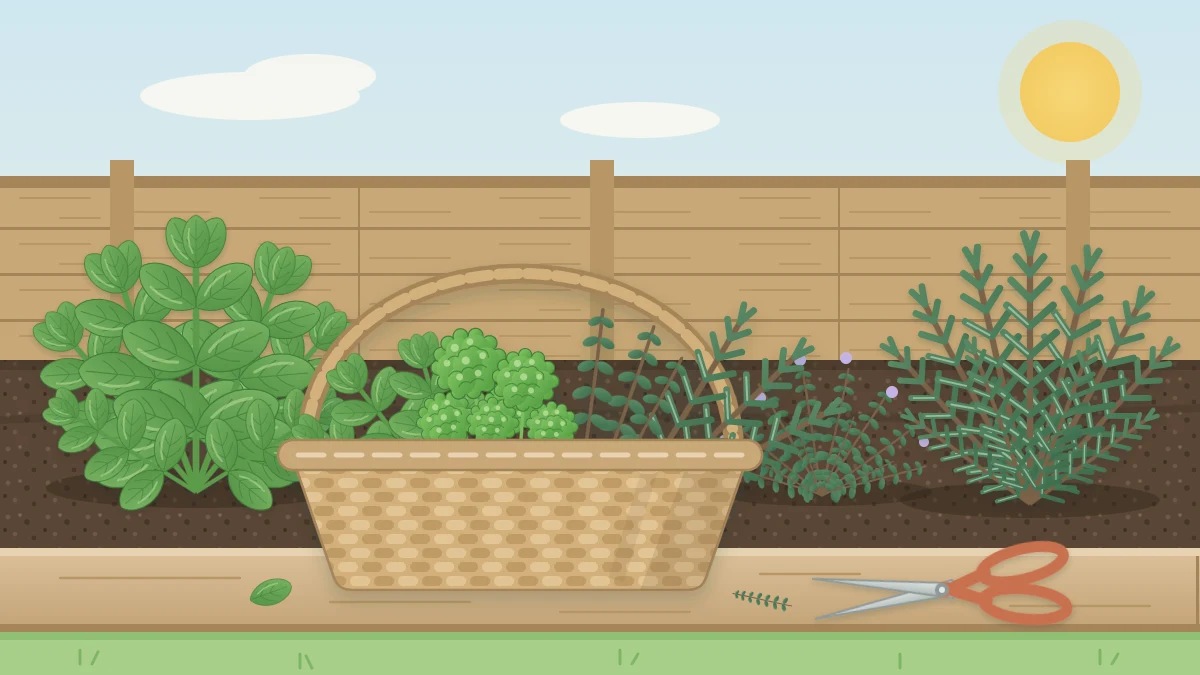
Very little. A pair of clean, sharp snips or scissors makes a neat cut that the plant closes over quickly. Blunt blades crush soft stems. Wipe the blades clean before you start, and again if you have been cutting a plant that looks unhealthy. Bring a basket or bowl so the cut stems are not squeezed in your hand.
First, work out how the herb grows
Where you cut depends on the plant’s growth habit. Kitchen herbs fall into two broad groups.
| Growth habit | Herbs | Where to cut |
|---|---|---|
| Branching | Basil, mint, oregano, thyme, sage, rosemary | Just above a pair of leaves or a side shoot |
| Clumping | Chives, parsley, cilantro | Whole outer leaves or stalks near the base, leaving the center |
Branching herbs grow from the tips of their stems and from buds at each node. Clumping herbs grow from a central point at soil level, pushing new leaves up from the middle. That one difference decides everything about how you cut.
How to harvest, step by step
- Look at the whole plant. Judge its size before cutting, so you know roughly what a third of it looks like.
- Identify the habit. Stems with leaves along them mean a branching herb. A tuft of leaves or stalks rising from the base means a clumping one.
- For a branching herb, follow a stem down from the tip to a pair of leaves or a side shoot. Cut just above that point. The buds there grow out, and the stem becomes two.
- For a clumping herb, choose outer leaves or stalks. Cut each one near the base. Leave the young growth in the center untouched, because that is where new leaves come from.
- Spread your cuts around the plant. Take a little from several sides instead of stripping one area.
- Stop at about a third. Step back, check what is left, and let the plant regrow before the next big harvest.
- Rinse gently and pat dry. Swish the stems in cool water to remove dust and insects, then blot them with a clean towel.
Tip
On a branching herb, avoid picking only the big lower leaves. That leaves a tall, bare stem with a small tuft on top. Cutting the stem tip above a leaf pair gives you leaves and a bushier plant.
How much is too much
A simple limit keeps you out of trouble: take up to about a third of the plant at a time, then let it regrow. Leaves are how the plant feeds itself, and one that keeps most of its foliage recovers quickly.
Two further cautions apply:
- New plantings: harvest lightly at first. A recent transplant or young seedling needs its leaves to establish roots. Pinching a tip or two is fine; a big cut can wait.
- Woody herbs: on thyme, sage and rosemary, keep cuts in the soft, leafy part of the stem. Bare old wood often does not sprout again.
Harvesting and pruning overlap a great deal. If you want to shape a plant or cut one back harder, the guide on how to prune herbs covers that in full.
Notes for individual herbs
Basil responds especially well to tip cutting, and regular harvesting delays flowering. The guide on how to grow basil explains its pinching routine.
Mint and oregano can be cut generously once established. Both regrow readily after a big harvest before bloom.
Chives are cut a little above the soil, a section of the clump at a time, so part of the plant is always in full leaf.
Parsley is picked stalk by stalk from the outside of the clump, cutting each stalk low instead of snipping off just the leafy top.
Cilantro has a short season before bolting, so harvest outer leaves early and often. Once it goes to flower you can leave it to set seed, which is covered in the guide to saving herb seeds.
Harvesting as the season ends
What you do in fall depends on the herb’s life cycle.
Perennials such as thyme, sage, oregano and chives should be cut less as cold weather nears. Ease off several weeks before your first fall frost, so the plant is not pushing tender new growth that could be caught by cold. Small pickings for the kitchen are fine.
Annuals such as basil will not survive frost in any case, so they can be cut heavily before it arrives. Watch your local forecast and bring in what you can use.
Good to know
Frost dates vary a great deal from place to place and from year to year. Look up the average first frost for your area and treat it as a rough marker, then follow the actual forecast as fall approaches.
What to do with a big harvest
Fresh herbs are at their best soon after cutting, so harvest close to when you plan to use them. When a plant gives you more than you need, as it will before flowering and at the end of the season, preserve the surplus. The guide on how to dry herbs explains which herbs dry well and how to do it.
Frequently asked questions
How much of an herb plant can I harvest at once?
A good limit is up to about a third of the plant at a time. Then let it regrow before the next large cut. Take less from new plantings that are still establishing, and less from perennials in the weeks before your first fall frost.
Where do I cut herbs so they grow back?
It depends on the growth habit. On branching herbs such as basil, mint and thyme, cut a stem just above a pair of leaves or a side shoot. On clumping herbs such as chives, parsley and cilantro, cut whole outer leaves or stalks near the base and leave the center.
What time of day is best for harvesting herbs?
Morning is generally best, once the dew has dried and before the heat of the day builds. The leaves are dry and firm then. For everyday cooking, though, picking a few sprigs whenever you need them does the plant no harm.