Saving Herb Seeds: Cilantro, Dill and Basil
How to collect, clean and store seed from cilantro, dill and basil, with the color signals that show when each is ripe and the limits of home-saved seed.
Tutorial at a glance
What you need
- Scissors or pruners
- Paper bags
- Garden twine
- A plate or shallow bowl
- Paper envelopes
- Pen for labeling
When cilantro, dill or basil sends up flowers, most gardeners reach for the scissors. If you leave a few plants alone instead, they will finish the job they started and hand you a supply of seed. Saving herb seeds costs nothing, takes very little equipment and gives you something to sow next year.
Cilantro and dill give you a second reward as well, since their seeds are used as spices in their own right. These three herbs are the easiest place to begin because each one makes plenty of seed and shows clearly when it is ready.
Let a few plants flower
Seed saving starts with a decision earlier in the season. Bolting, when an herb goes to flower and seed, ends the best leaf harvest, so you would normally pinch out flower buds or pull the plant. For seed, pick two or three of your strongest plants and let them go.
Keep harvesting leaves from the rest of the row as usual. The plants you set aside will grow tall and look untidy for several weeks while the flowers fade and the seeds fill out. A stake keeps top-heavy stems from flopping onto the soil.
With cilantro this fits the plant’s habits well, because it bolts quickly once the weather warms. The cilantro growing guide explains why that happens and how to keep leaves coming in the meantime.
How to tell when seeds are ripe
Seeds picked too early are soft and pale and rarely sprout. Each of the three herbs gives a clear color signal.
| Herb | What the seed looks like | Ready when |
|---|---|---|
| Cilantro | Small round seeds, known as coriander | They turn from green to tan-brown |
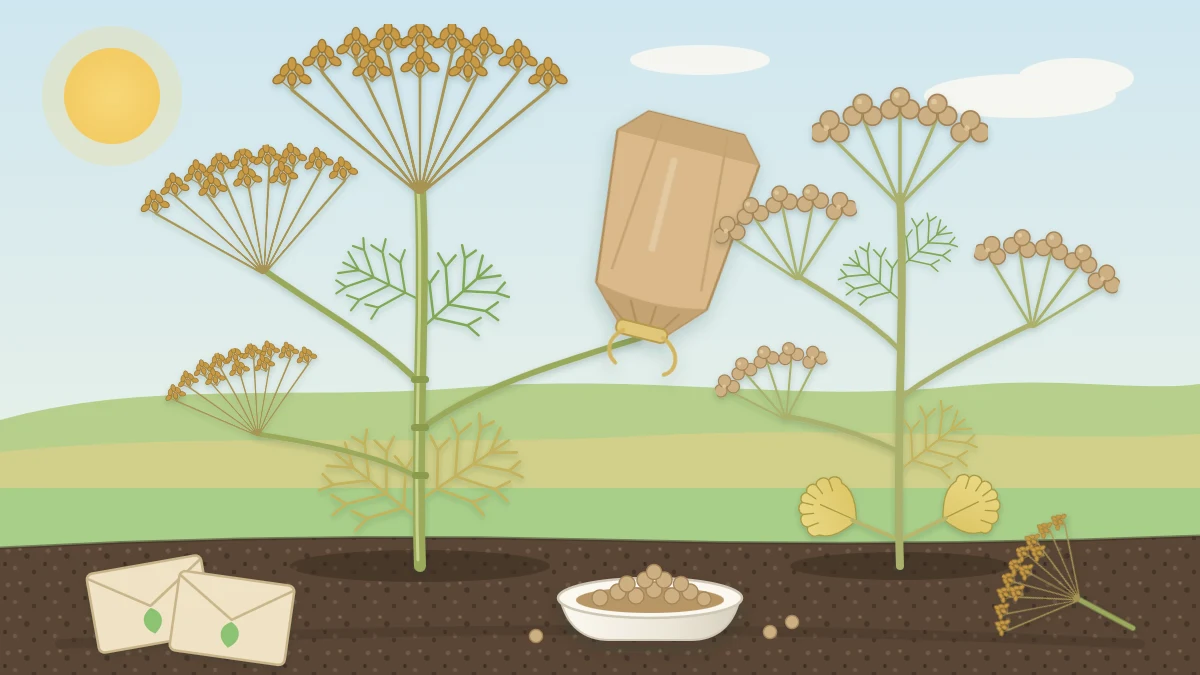
| Dill | Flat seeds on umbrella-shaped heads | They turn golden brown as the stems begin to dry |
| Basil | Tiny black seeds hidden inside the flower spikes | The spikes are dry and brown |
Seeds on one head do not all ripen together. Cut when most of them have colored, rather than waiting for the last few, because fully ripe seed drops to the ground easily. For more about the plant itself, see the NC State Extension profile for dill.
Collecting the seed, step by step
- Choose a dry day. Wait until the dew has gone. Damp seed heads are slow to dry and can mold in the bag.
- Cut the seed heads. Snip each head with a few inches of stem once most of the seeds have changed color. Hold a bowl or bag underneath to catch any that fall.
- Bag them head-down. Place the heads upside down in a paper bag and fold the top over loosely. Use paper, not plastic, so moisture can escape.
- Let them finish drying. Leave the bag somewhere airy and dry, out of direct sun, for a week or two. Many seeds will drop to the bottom by themselves.
- Free the seeds. Shake the bag, then rub the heads between your fingers over a plate. Basil spikes need a firmer rub to release the seeds tucked inside.
- Pick out the chaff. Lift out stems and husks by hand. For a finer clean, tip the seeds slowly from one bowl to another outdoors in a light breeze so the dust drifts away.
- Dry the seeds fully. Spread them in a single layer on a plate for several more days before packing them.
- Label and store. Put the seeds in paper envelopes marked with the herb, the variety and the year.
Tip
If rain or wind threatens before you can harvest, slip a paper bag over a nearly ripe seed head while it is still on the plant and tie it loosely around the stem. Seeds that shatter fall into the bag instead of onto the bed.
Drying and storing seed
Moisture is the main enemy of stored seed. A seed that looks dry on the outside can still hold enough water to spoil a whole envelope, which is why the extra days on a plate matter. Cilantro and dill seeds should feel hard, and none should dent under a fingernail.
Keep the labeled envelopes in a cool, dry place, away from sunny windows, heaters and damp sheds. Paper envelopes inside a lidded tin or jar work well, as long as the seed was truly dry when it went in.
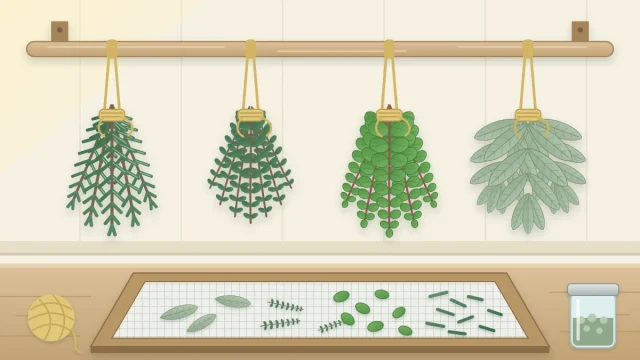
Seed you plan to use as a spice needs the same care but ends up in a different container. The approach to finishing and storing it matches the method for drying herbs: dry completely, then store airtight away from light and heat.
What saved seed can and cannot promise
Home-saved seed is worth having, but it comes with honest limits.
- Hybrids may not match. Seed saved from a hybrid variety often gives plants that differ from the parent in size, flavor or vigor. Check the original packet or label to see whether your variety is a hybrid.
- Neighbors can cross. If two varieties of the same herb flower near each other, insects may carry pollen between them. Basil varieties are a common example. The seedlings can be a mix of both.
- Vigor fades. Stored seed loses vigor over the years, so fewer seeds sprout as time goes by. Sow older seed a little more thickly and date every envelope.
None of this is a reason to hold back. It simply means the results can surprise you, and that fresh seed from a known source is the safer choice when you need one particular variety.
Let some seed sow itself
You do not have to collect everything. Self-sown seedlings of cilantro and dill often appear without any help where seed has fallen, sometimes later the same season when the weather cools and sometimes the following spring.
If you like the idea, leave one seed head standing and avoid disturbing the soil beneath it. Thin the seedlings that come up, and pull any that land where you do not want them. Dill in particular can scatter widely, so remove extra seed heads before they shatter if you would rather keep it in one place.
Sowing what you saved
Next season, treat your envelopes like any bought packet. Cilantro and dill usually do best when you direct sow them where they will grow, while basil waits for warm soil after your last frost. The guide to growing herbs from seed covers depth, spacing and thinning.
Sow a short test row first if the seed is more than a year or two old. A good show of seedlings tells you the rest of the envelope is worth using, and a thin one tells you to sow the remainder more generously.
Frequently asked questions
Can I save seed from any basil plant?
You can collect seed from any basil that flowers and sets it, but the results vary. Seed from a hybrid variety, or from a plant that flowered beside a different basil, may grow into plants unlike the parent. If you want a close match, grow one variety on its own and check that it is not a hybrid.
Why did my saved cilantro seeds not sprout?
There are several possibilities. The seed may have been cut while still green and unripe, stored before it was fully dry, or kept somewhere warm or damp. Older seed also sprouts less reliably. Sowing a small test row before the main sowing shows you how much life is left in an envelope.
How long do saved herb seeds last?
There is no fixed figure, because it depends on the herb, how ripe and dry the seed was, and where it has been kept. Vigor drops gradually over the years. Date every envelope, use the oldest seed first, and sow it more thickly to make up for the seeds that no longer sprout.