Growing Herbs from Seed: A Step-by-Step Guide
A practical walk-through of raising herb seedlings: reading the packet, choosing between direct sowing and trays, sowing at the right depth, thinning, and hardening off young plants for the garden.
Tutorial at a glance
What you need
- Herb seed packets
- Clean cell tray or small pots with drainage holes
- Seed-starting mix
- Blank plant markers and a waterproof pen
- Spray bottle or fine-rose watering can
- Small scissors for thinning
A packet of seed holds dozens of future plants for the price of a single starter plant, which makes growing herbs from seed one of the most satisfying ways to fill a bed. It asks for a little patience and a few simple habits, not special skill.
This guide walks through the general method, from reading the packet to moving sturdy young plants outside. The goal throughout is herbs that end up growing in your garden or in pots outdoors.
Read the seed packet first
The packet is the instruction sheet for that exact variety. Before you open it, look for three things:
- Sowing depth. Seeds planted too deep often fail to reach the surface.
- Timing. Packets give timing relative to your last frost, such as a number of weeks before or after it.
- Where to sow. Some herbs are best sown directly in the garden, and others are usually started in trays.
Timing depends on where you live. If you do not yet know your average last frost, the guide on when to plant herbs explains how to find it and how each group of herbs fits around it.
Direct sow or start in trays?
Herbs fall into two broad camps, and choosing the right one saves a lot of disappointment.
Herbs to direct sow
Cilantro and dill dislike having their roots disturbed. They are usually sown right where they will grow, in a prepared bed or a deep container, and thinned once they are up. Moving them later often sets them back or pushes them toward bolting. The guide on how to grow cilantro covers sowing it in small batches for a longer harvest.
Herbs to start in trays
Basil, parsley and chives are commonly started in trays or small pots and moved out as young plants. That gives them a head start in a protected spot while the weather outside is still unsettled.
Not sure whether seed is the right choice for a particular herb at all? The comparison of seeds and transplants for each herb will help you decide.
What you need
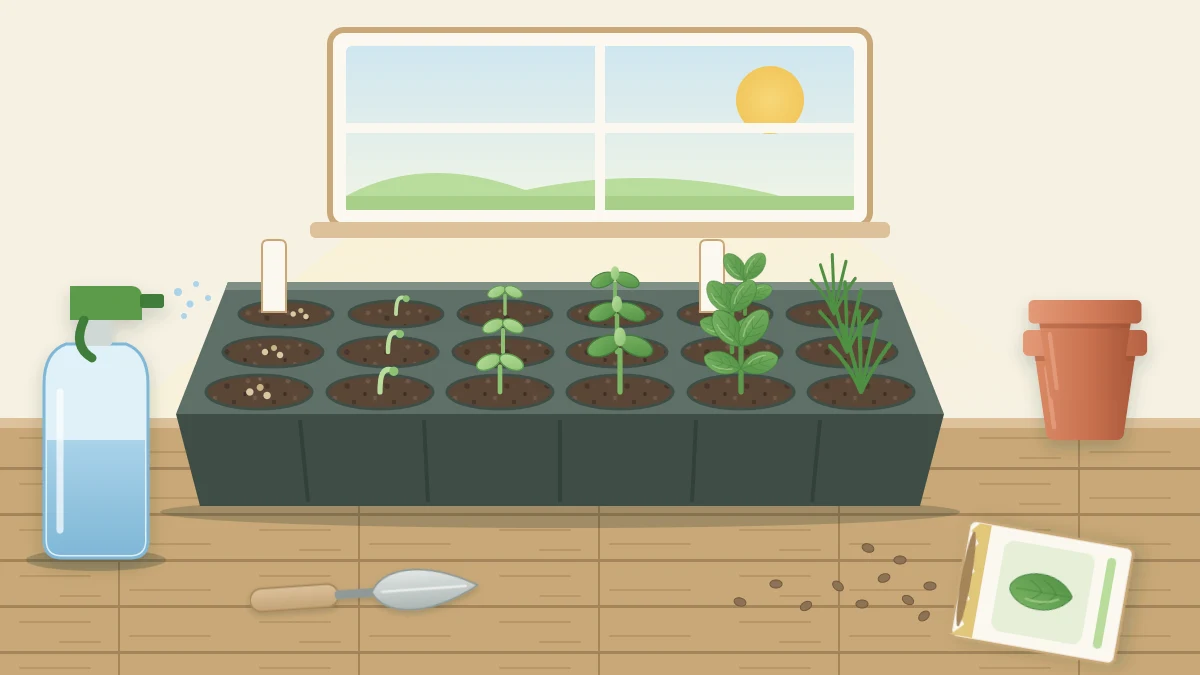
The setup is modest. Gather clean containers with drainage holes, a bag of seed-starting mix, blank plant markers, a waterproof pen and a gentle way to water, such as a spray bottle or a can with a fine rose. Seed-starting mix is finer and lighter than garden soil, so small roots can push through it easily and extra water drains away.
How to sow herb seeds, step by step
- Moisten the mix. Tip the seed-starting mix into a bucket and stir in water until it is evenly damp, like a wrung-out sponge. Dry mix sheds water, so wetting it first makes everything easier.
- Fill the containers. Fill each cell or pot nearly to the rim and tap it on the table to settle the mix. Do not press it down hard.
- Sow shallowly. Place two or three seeds in each cell at the depth the packet gives. Tiny seeds should be barely covered with a light dusting of mix, or simply pressed onto the surface.
- Label right away. Write the herb and the sowing date on a marker and push it in. Young seedlings of different herbs can look surprisingly alike.
- Keep the mix evenly moist and warm. Mist the surface or water from below so seeds are not washed out of place. A loose clear cover holds in moisture until the first sprouts show, then it should come off.
- Give strong light as soon as seedlings appear. Move the tray to the brightest spot you have the moment green shows. Seedlings kept in weak light stretch tall and thin within days.
- Thin to the strongest seedling. Once the seedlings have their first true leaves, keep the sturdiest one in each cell and snip the others off at the surface with scissors. Pulling them can disturb the roots of the one you are keeping.
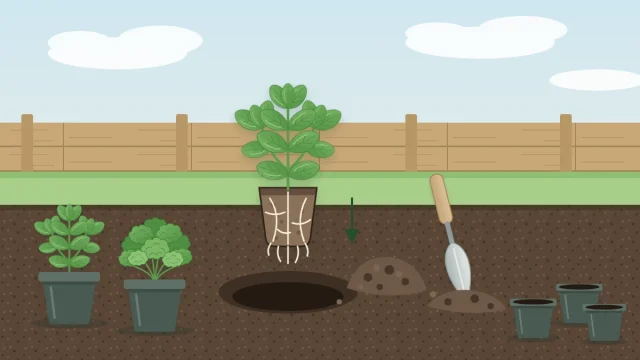
- Harden off before planting out. Over a week or two, set the seedlings outside for a little longer each day so they adjust to sun, wind and cooler nights.
For more detail on containers, mixes and light, see the University of Maryland Extension guide to starting seeds indoors, which applies to herbs as well as vegetables.
Sowing directly in the garden
The method for cilantro, dill and other direct-sown herbs is even simpler. Rake the soil surface until it is fine and crumbly, removing stones and clods. Scatter the seed thinly or sow it in a shallow row at the depth on the packet, cover lightly and water with a gentle spray.
Keep the surface from drying out until the seedlings are up, which is the stage when most direct sowings fail. Then thin them to the spacing on the packet so each plant has room.
Be patient with slow starters
Herbs do not all sprout at the same pace. Basil is usually quick. Parsley is known for being slow to germinate, and it is common to wonder whether anything is happening at all. Keep the mix evenly moist, keep the label in place and give it time before you decide a sowing has failed.
Common seedling problems
Most trouble with young herbs traces back to light or water, though each symptom can have more than one cause.
- Tall, thin, leaning seedlings. Often a sign of too little light, and sometimes of too much warmth after sprouting. Move them somewhere brighter and a little cooler.
- Seedlings that collapse at the soil line. One possibility is a fungal problem that thrives in wet, still conditions. Water less, improve air movement and start again in clean containers with fresh mix if a tray is badly affected.
- No sprouts at all. The seed may have been sown too deep, dried out, been kept too cold or simply be old. Check the packet date and the depth before resowing.
From tray to garden
Seedlings are ready to move when they have several sets of true leaves and roots that hold the mix together when you slide one out. Do not rush tender herbs such as basil outside while frost is still possible.
Good to know
Frost dates are averages, not promises. Keep an eye on the forecast during the first weeks after planting out and have a light cover ready for a cold night.
When the weather has settled and your plants are hardened off, follow the steps in how to transplant herb seedlings to get them into the ground with as little stress as possible.
Frequently asked questions
Which herbs are easiest to grow from seed for a beginner?
Basil is a good first choice because it sprouts readily and grows quickly once the weather is warm. Cilantro and dill are also simple as long as you sow them directly where they will grow. Chives are reliable too, though the seedlings stay thin and grass-like for a while.
How deep should herb seeds be planted?
Follow the depth printed on the seed packet, because it varies by herb. As a general guide, small seeds are sown shallowly, and very tiny ones are barely covered or just pressed onto the surface of moist mix. Seeds buried too deep often run out of energy before reaching the light.
Why are the herb seedlings tall and floppy?
Stretched, leaning seedlings are often reaching for light, and extra warmth after sprouting can add to the problem. Move the tray to the brightest place available and keep it a little cooler. Thin crowded cells as well, since seedlings packed together compete and stretch even more.