How to Prune Herbs for Bushier, Longer-Lasting Plants
Find out exactly where to cut soft, clumping and woody herbs so they branch out instead of growing tall and bare, and how much you can take at one time.
Tutorial at a glance
What you need
- Clean, sharp snips or scissors
- Cloth for wiping the blades
- Bowl or basket for trimmings
- Garden gloves (optional)
A basil plant that looked neat a month ago is now one tall stem with a flower spike on top. The mint is flopping across the path, and the sage has gone bare at the base. All three are asking for the same thing: a few well-placed cuts.
Learning how to prune herbs is mostly a matter of learning where to cut, because the right spot is different on a soft basil stem, a clump of chives and a woody rosemary branch. This guide takes each group in turn, starting with the job you will do most often.
Why one cut gives you two stems
Most leafy herbs grow from the tip of each stem. While that tip is in place, the plant keeps stretching upward. Take the tip off, and the small buds waiting lower down start to grow instead.
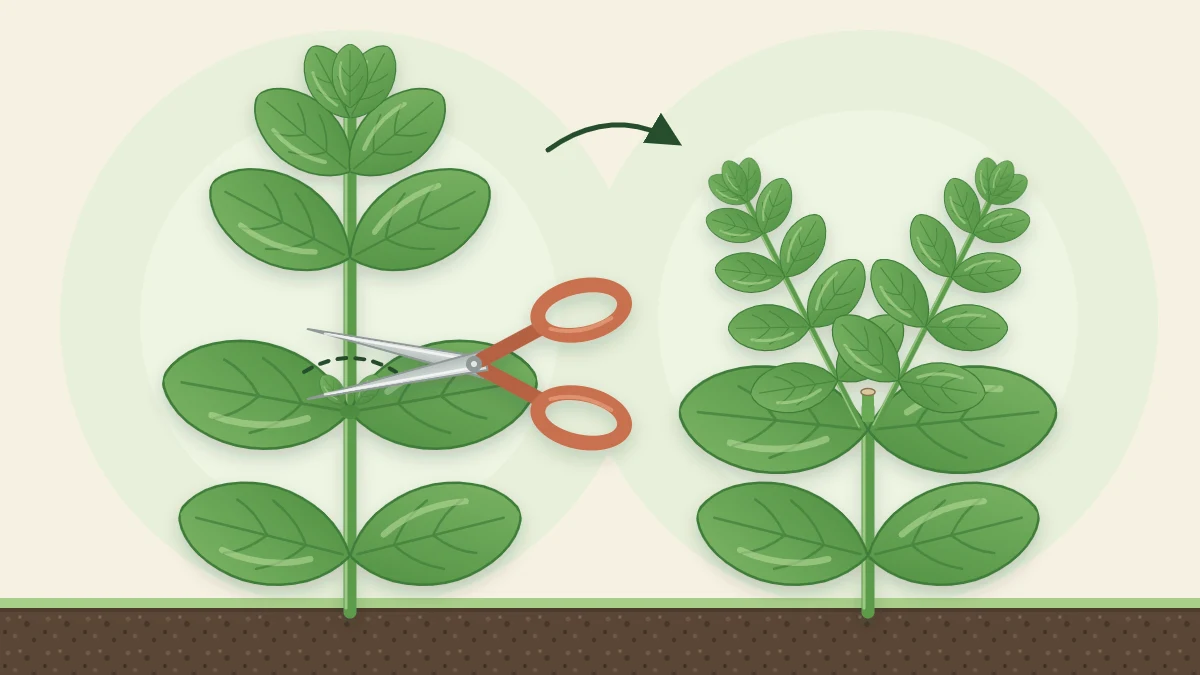
On herbs that carry their leaves in opposite pairs, such as basil, mint and oregano, two new shoots grow from the node just below the cut. A node is the point where leaves join the stem. One stem becomes two, and if you repeat the cut on those two a few weeks later, you have four. That is the whole secret behind a bushy plant.
Pruning also holds back flowering. Once a leafy herb puts its effort into flowers and seed, it makes fewer new leaves, and the flavor of the leaves often changes.
What you need before you start
- Clean, sharp snips or scissors for anything tougher than a soft tip
- Your thumb and forefinger for pinching soft growth
- A cloth for wiping the blades between plants
- A bowl or basket for the trimmings, which are usually good to use in the kitchen
Sharp blades make a clean cut, while dull ones crush the stem. Wiping the blades is a small habit that matters most when one of your plants looks unwell and you do not want to carry the problem to the next one.
How to prune soft leafy herbs
These steps suit basil, mint, oregano and other herbs with soft green stems and leaves in pairs.
- Wait for enough growth. A young seedling needs its leaves. Start once each stem has several leaf pairs.
- Pick the tallest stem. Follow it down from the tip until you reach a healthy leaf pair. Look closely and you will often see two tiny shoots tucked into the joints.
- Cut just above that leaf pair. Pinch a soft tip with your fingers, or snip a firmer stem. Cut a little above the node, close enough that you do not leave a long bare stub.
- Work around the plant. Shorten the tallest stems first so the plant ends up roughly even, like a low dome.
- Remove flower buds. On basil especially, pinch out flower buds as soon as you spot them to keep leaf production going.
- Stop at about a third. Step back and look. If you have taken roughly a third of the plant, you are done for now.
Basil responds to this more visibly than almost any other herb, and the guide to growing basil covers the rest of its care through the warm season.
Tip
Pruning and picking are the same cut. If you take your kitchen sprigs from the stem tips, just above a leaf pair, the plant gets pruned a little each time you cook.
Clumping herbs: chives and parsley
Chives and parsley do not branch the way basil does. New leaves rise from the center of the clump at soil level, so trimming the tips does nothing useful. It only leaves blunt, browning ends.
Instead, cut whole leaves or stalks near the base:
- Chives: gather a small bundle of leaves and cut them a little above the soil. Fresh leaves grow back from the base.
- Parsley: take the outer stalks first, cutting each one low down. The young growth in the center is left to keep the plant going.
Yellowed or tired outer leaves can come off the same way at any point in the season.
Woody herbs: rosemary, sage and thyme
These herbs build a framework of hard, brown stems over the years, with soft green growth at the ends. The soft growth is what you prune.
- Trim the green shoots, cutting above a set of leaves, to keep the plant compact.
- Shape lightly after flowering or in spring, once new growth shows you which stems are alive.
- Do not cut back into old bare wood. Wood with no leaves on it seldom resprouts, so a hard cut there can leave a permanent gap.
Sage is the one most likely to turn leggy and open in the middle, and the sage growing guide explains how to keep an older plant in shape.
How much to take, and when to hold back
A simple limit works for nearly every herb: take no more than about a third of the plant at once. The leaves that remain are what power the regrowth. A plant stripped to bare stems may recover slowly, or not at all.
Timing matters most for perennials. Avoid hard pruning late in the season, before cold weather arrives. A big cut prompts tender new shoots, and those are the first to be damaged by frost. Light picking for the kitchen is fine. Save the real shaping for spring or for just after flowering.
Good to know
A plant that is wilting, newly planted or struggling in a heat wave has enough to cope with. Sort out the stress first, then prune once it is growing strongly again.
Where to cut, at a glance
| Type of herb | Examples | Where to cut |
|---|---|---|
| Soft and leafy | Basil, mint, oregano | Just above a leaf pair |
| Clumping | Chives, parsley | Whole leaves or outer stalks near the base |
| Woody | Rosemary, sage, thyme | In the soft green growth, never in bare wood |
Little and often beats one big cut
Herbs are easier to manage with small, regular trims than with one rescue job at the end of summer. A stem tip pinched while it is still soft takes a second and leaves no mark. A stem left to grow tall and flower needs a harder cut, and the plant takes longer to fill back in.
If you remember only one thing, make it this: find a leaf pair, and cut just above it. For more on choosing which stems to take and the best time of day to gather them, see the guide on how to harvest herbs.
Frequently asked questions
Where exactly do I cut a basil stem?
Follow the stem down from the tip until you reach a healthy pair of leaves, then cut or pinch a little above that point. Two new shoots usually grow from the joints of that leaf pair, so the stem branches into two instead of continuing straight up.
Can I cut rosemary back hard if it has become leggy?
It is safer not to. Old, bare rosemary wood seldom sends out new shoots, so a hard cut can leave a gap that never fills in. Trim the soft green growth instead, a little at a time over a season or two, and keep every cut above some leaves.
How much of an herb plant can I remove at once?
A useful limit is about a third of the plant in one session. The leaves you leave behind fuel the regrowth, so a plant cut much harder than that may be slow to recover. Let it fill back in before you prune again.