Common Herb Garden Problems and What to Check First
Yellow leaves, wilting, leggy stems, holes or a white coating? Work through the likely causes of each symptom and the simple check that tells them apart.

Herbs rarely fail without warning. Leaves turn yellow, stems flop, holes appear overnight or a pale dust settles on the foliage. The trouble is that each of these signs can come from several different causes, and guessing wrong often makes things worse.
Most herb garden problems can be narrowed down with a few simple checks before you change anything. This guide is organized by what you see, with the likely causes for each and the check that tells them apart.
Three checks to make before anything else
Whatever the symptom, start here. These take a couple of minutes and rule out the most common causes.
- Feel the soil. Push a finger in to the second knuckle. Is it dry, pleasantly moist or soggy? This one check settles more questions than any other.
- Look at the light. Count roughly how many hours of direct sun the plant really gets, now that nearby plants and trees have leafed out.
- Turn the leaves over. Check the undersides and the shoot tips for insects, eggs or droppings.
Note too whether one plant is affected or the whole bed. A single struggling plant points to something local, such as a pot that drains badly. A whole bed points to weather, watering or soil.
Yellow lower leaves
A few yellow leaves at the bottom of a plant are often just old leaves being shaded out. When many turn yellow, there are several possibilities:
- Wet soil. Roots sitting in water cannot work properly. If the soil is soggy and stays that way, drainage or overwatering is one likely cause.
- Crowding. Plants packed tightly shade each other’s lower leaves and trap damp air.
- Low light. Leaves that get too little sun are often shed first.
- Hunger in pots. Potting mix has limited reserves, and regular watering washes them through. A long-established container plant that is pale all over may need feeding.
The soil check separates the first cause from the rest. If the soil is wet, sort that out before anything else, using the guide on how to water herbs. If a potted herb is evenly moist, well lit and still pale, read about fertilizing herbs before you reach for a product.
Wilting
Dry soil is the obvious cause, but it is not the only one, and watering a plant that is already too wet makes matters worse.
- Dry soil: the soil feels dry at finger depth and a pot feels light. Water thoroughly and the plant usually perks up within hours.
- Waterlogged roots: the plant droops although the soil is wet. Damaged roots cannot take up water, so the top looks thirsty. Let the soil dry and improve drainage.
- Midday heat: soft-leaved herbs such as basil may droop in hot afternoon sun even in moist soil, then recover by evening. If the plant looks fine again the next morning, heat is the probable reason.
Tip
Check a wilting plant twice: once when you notice it, and again early the next morning. A plant that recovers overnight in moist soil was coping with heat, not asking for more water.
Leggy, pale growth
Long stems with wide gaps between the leaves often mean the plant is stretching toward light. Most culinary herbs want full sun, which is about six or more hours of direct sun. Compare your count with what each plant prefers in the guide on how much sun herbs need.
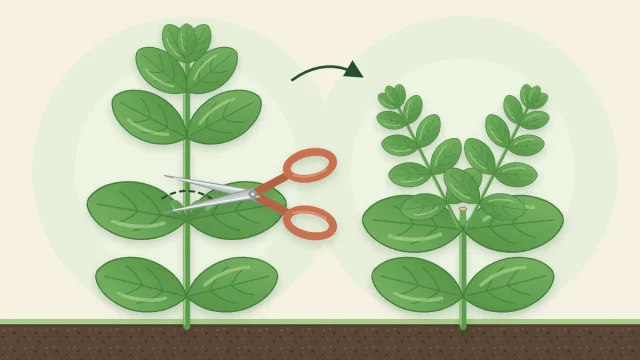
The other common reason is that nobody has pinched the plant. Basil, mint and oregano grow as single tall stems unless their tips are removed. If the light is good, the fix is in the snips: see how to prune herbs for where to cut.
Flowering and going to seed early
When cilantro, dill or basil suddenly sends up a flower stalk, it is called bolting. Heat and lengthening days trigger it in cilantro and dill, and basil flowers as summer goes on. It is the plant completing its life cycle, not a mistake on your part.
You can slow it but not stop it. Pinch flower buds off basil as they appear. For cilantro and dill, sow small batches in cool weather and accept that each batch has a short season.
Holes and chewed leaves
Ragged holes mean something is eating the leaves, and the first job is to find out what. Look in the evening or early morning, when many of the culprits are active.
- Caterpillars leave dark droppings and are often hidden along a stem or under a leaf.
- Beetles feed in daylight and tend to leave leaves looking like lace.
- Slugs and snails come out at dusk and leave silvery trails.
For all three, hand-picking is the simplest answer on a small herb patch. A few holes do not harm the plant or the harvest.
One visitor deserves a second look. Parsley and dill may host the striped caterpillars of swallowtail butterflies. Many gardeners choose to leave them, or grow a few extra plants to share.
Clusters of small insects on shoot tips
Small, soft-bodied insects crowded on new shoots and under young leaves are usually aphids. They may be green, black or gray, and the leaves around them can curl or feel sticky.
Start with a firm spray of water from the hose, which knocks most of them off. Repeat when they return, and pinch off any tip that is badly covered. The University of California IPM program has a detailed guide to aphids if they keep coming back.
White powdery coating on leaves
A pale coating that looks like a dusting of flour is often powdery mildew. Sage is a frequent host. It tends to show up on crowded plants where air does not move freely.
- Remove the affected leaves and put them in the trash, not the compost.
- Thin or space plants so air can pass between them.
- Water at the base of the plant.
See the University of California IPM page on powdery mildew on vegetables for more detail.
Good to know
If you decide to use any pesticide, the label must list both your pest and edible herbs, and it must be followed exactly, including the waiting time before harvest. On plants you are going to eat, physical steps are the better place to start.
Frequently asked questions
Why do herb leaves turn yellow?
There are several possible reasons, including soil that stays too wet, crowded plants, too little light and, in containers, a potting mix that has run low on food. Feel the soil first. If it is soggy, deal with drainage and watering before looking at the other causes.
Why does basil wilt in the afternoon when the soil is moist?
Often nothing is wrong. Soft-leaved herbs often droop in strong afternoon heat and recover by evening. Check again early the next morning. If the plant is upright and the soil is still moist, heat is the likely reason, and extra water would not help.
Should I remove caterpillars from my parsley?
That is your choice. Parsley and dill may host swallowtail butterfly caterpillars, and many gardeners leave them to feed or plant a few extra to share. If the damage is more than you want, you can move the caterpillars by hand to a spare plant.