How Much Sun Do Herbs Need? Full Sun vs Part Shade
What full sun and part shade mean, which common herbs are listed for each, and a simple way to count the hours of direct light your own garden spot receives.
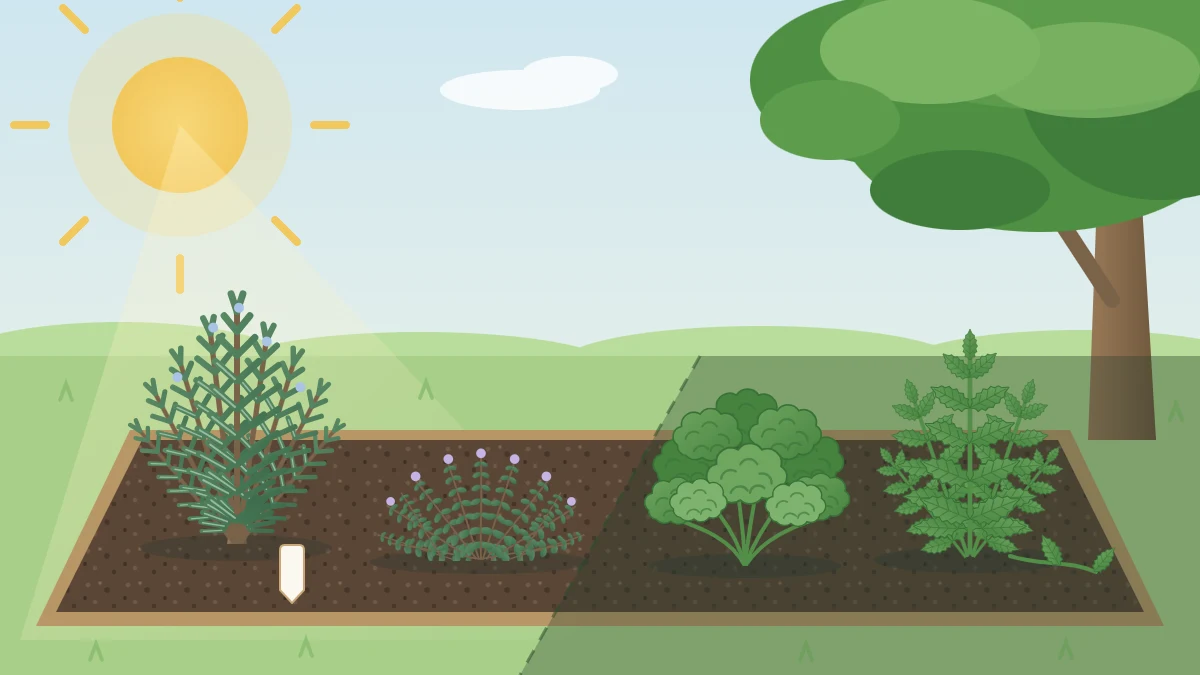
Light is the first thing to check before you plant, and the hardest thing to change afterward. So how much sun do herbs need? For most culinary herbs the short answer is as much direct sun as you can give them, with a handful that manage well on less.
The longer answer depends on the herb, on how hot your summers get and on how many hours of direct light your spot really receives, which is often different from what you would guess.
What full sun and part shade mean
Plant labels and seed packets use a few standard terms:
- Full sun means about six or more hours of direct sunlight a day.
- Part shade means roughly two to six hours of direct sun.
“Direct” is the important word: the sun’s rays reach the leaves with no tree, wall or roof in between. A bright spot under an open sky that never gets a sunbeam still counts as shade on a plant label. The hours do not have to be continuous, either. Three hours in the morning and three in the late afternoon add up to full sun.
Which herbs want what
In the NC State Extension plant profiles, the common kitchen herbs fall into two groups. Rosemary, thyme and parsley are listed for full sun. Basil, cilantro, chives, mint, oregano, sage and dill are listed as growing in full sun or part shade.
| Herb | Light it is listed for | Note |
|---|---|---|
| Rosemary | Full sun | Give it the brightest spot you have |
| Thyme | Full sun | Low grower, so keep taller plants from shading it |
| Parsley | Full sun | Cool-season herb; afternoon shade can help in hot summers |
| Basil | Full sun or part shade | Usually bushiest with plenty of sun |
| Cilantro | Full sun or part shade | Goes to seed faster in heat |
| Chives | Full sun or part shade | An accommodating choice for a mixed spot |
| Mint | Full sun or part shade | Vigorous in either; keep it in its own pot |
| Oregano | Full sun or part shade | Flavor is usually stronger with more sun |
| Sage | Full sun or part shade | Growth is usually denser in full sun |
| Dill | Full sun or part shade | Tall stems tend to be sturdier in bright light |
“Listed for part shade” means the plant can grow there, not that it prefers it. For nearly all of these herbs, flavor and bushiness are usually best with more sun. To see how a listing is worded, look at the NC State Extension profile for basil.
The individual plant guides go further. Growing rosemary outdoors, for example, is largely a matter of sun and drainage.
How to measure the light in your own spot
Guessing rarely works, because we remember a spot the way it looks at the time of day we are usually outside. Measuring takes one clear day:
- Pick a clear day during the growing season.
- Look at the spot in the morning, around midday and in late afternoon. Looking every hour or two is better still.
- Each time, note whether the ground where the herbs would grow is in direct sun or in shadow.
- Add up the hours of direct sun.
Six or more is full sun. Two to six is part shade. Less than that is a hard place for most herbs.
Keep the seasons in mind. The sun rides higher in summer than in spring and fall, and deciduous trees cast far more shade once they have leafed out, so a spot measured in early spring may look different by midsummer. In the Northern Hemisphere, ground on the south and west sides of a building generally gets the most sun and the north side the least.
If you are still choosing between a few possible locations, light is only one of the things to weigh. The guide to planning an herb garden covers drainage, access and layout as well.
When some afternoon shade helps
More sun is not better in every garden. Two situations call for a little relief.
Hot-summer climates
Where summer afternoons are long and intense, even sun-loving herbs can wilt and scorch at the leaf edges, and pots dry out very quickly. A site with sun from morning until early afternoon and light shade afterward is often easier on the plants than one that bakes until sunset.
Cool-season herbs
Cilantro and parsley grow best in cool weather and go to seed faster in heat. Shade during the hottest part of the day keeps soil and leaves cooler and can stretch the harvest a little as the season warms. The guide on how to grow parsley has more on keeping it productive.
Tip
A taller plant can provide the shade. Cilantro or parsley set on the east side of a row of dill or a trellis gets morning sun and is shielded later in the day.
Signs your herbs may not be getting enough light
Plants in too little light often change shape before anything else. Possible signs include:
- long, weak stems with wide gaps between leaf pairs
- stems leaning toward the brightest side
- pale, sparse leaves
- slow growth and little regrowth after cutting
Treat these as possibilities, not proof. Leggy growth can also follow crowding or a lack of pinching, and pale leaves have several other possible causes, including soggy soil. The check that separates them is the one above: count the hours of direct sun. If the count is low and the other conditions look reasonable, light is the sensible place to start.
What to do with a spot that falls short
A low count does not have to end the project. You have a few options:
- Move to containers. Pots can go wherever the sun is, including a driveway edge or a set of steps.
- Remove what you can. Thinning a few overhanging branches, or shifting a tall pot or piece of furniture, may add an hour or two.
- Choose herbs to match. In part shade, lean on chives, mint and cilantro, and save rosemary and thyme for a brighter place.
- Adjust expectations. Herbs in less light grow more slowly, so harvest lightly and give plants time to recover.
If you are just starting out and still weighing the basics, the beginner’s guide to herb gardening walks through the other first decisions.
Frequently asked questions
Can herbs grow in shade?
Several can manage with part shade, meaning roughly two to six hours of direct sun. Chives, mint, cilantro, basil, oregano, sage and dill are listed as growing in full sun or part shade. Growth is usually slower and less bushy than in full sun, and very few herbs do well in deep shade.
Is morning sun or afternoon sun better for herbs?
Either counts toward the daily total. In hot-summer climates, morning sun with light afternoon shade is often gentler, especially for cool-season herbs such as cilantro and parsley. In cooler climates, herbs generally benefit from all the sun they can get, including the warmer afternoon hours.
How can you tell if herbs are not getting enough sun?
Long, weak stems, wide gaps between leaf pairs, leaning toward the light and pale, sparse leaves are possible signs. None of them is proof, because crowding, lack of pinching and wet soil can look similar. Count the hours of direct sun on a clear day to check.