Herb Gardening for Beginners: A Simple Starting Guide
A plain starting point for a first outdoor herb garden: what culinary herbs have in common, the first decisions to make, and the two plant groups that explain most care differences.
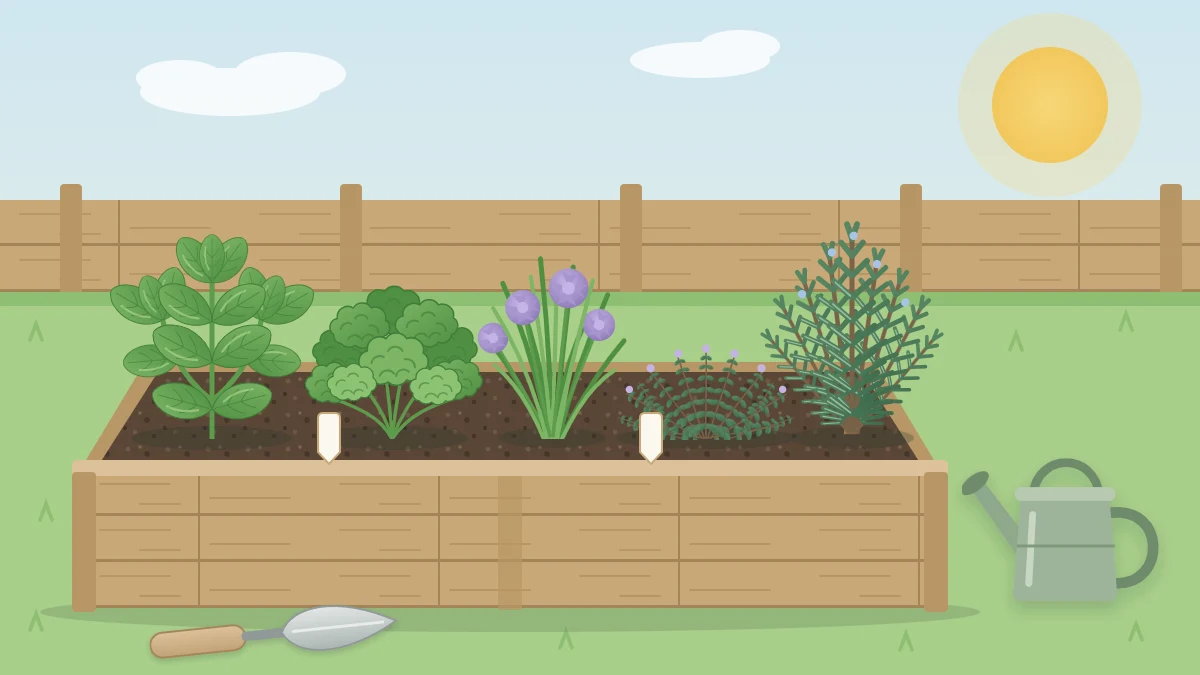
Fresh basil, a few sprigs of thyme, a handful of chives cut on the way to the kitchen: a small herb patch earns its space quickly. If you are looking into herb gardening for beginners, the good news is that most culinary herbs ask for the same few things, and you can learn them in an afternoon.
This guide gives you the overall picture: what herbs need, which decisions to make first, and where the care really differs from one plant to another. Each topic has its own detailed guide, linked along the way, so you can go deeper when you reach that step.
What most culinary herbs have in common
The herbs in a typical kitchen garden come from several plant families, yet their basic wants overlap a great deal.
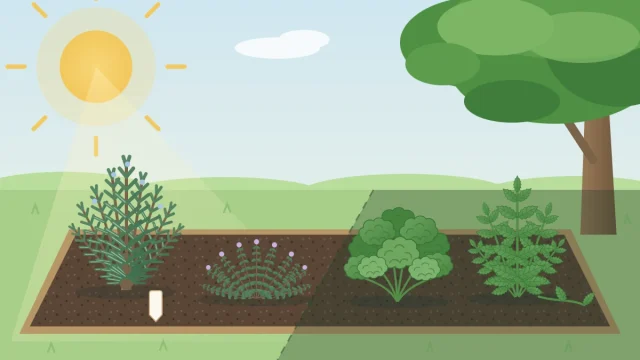
- Sun. Many herbs do best with six or more hours of direct sun a day, which gardeners call full sun. A few cope with part shade, but leaves are usually fuller and more flavorful in good light.
- Well-drained soil. Water should soak in and move through rather than sit in puddles. Roots that stay soggy are a common reason herbs fail.
- Regular light harvesting. Cutting a little and often encourages most herbs to branch and produce fresh leaves.
For a second reference, see the University of Illinois Extension overview of herb gardening.
First decision: a garden bed or pots
Herbs grow well in the ground, in a raised bed or in containers, so start with the sunniest spot you have rather than the type of garden you think you should have.
A bed gives roots more room and holds moisture longer, which means less day-to-day attention. Pots let you grow on paving, move plants toward the light, and keep spreading herbs such as mint under control. Whichever you choose, stay close to the kitchen door if you can. Herbs you walk past get picked, watered and noticed.
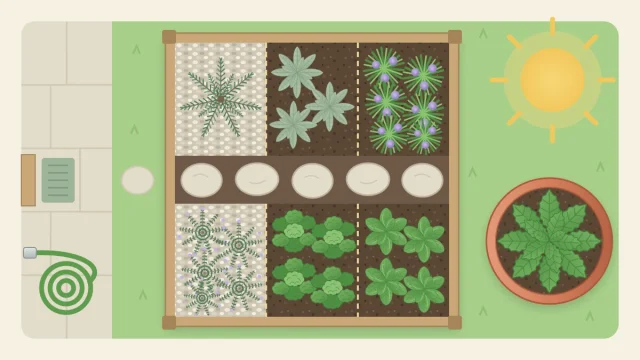
Before you buy anything, spend a little time on planning the site, size and layout of your herb garden. A small, well-placed bed is easier to look after than a large one in the wrong place.
Pick three to five herbs you actually cook with
It is tempting to buy one of everything. A better start is three to five herbs that already appear in your cooking, because you will harvest them often and learn how each one grows.
A few common first choices:
- Basil for tomato dishes and summer salads.
- Parsley as an all-purpose fresh green.
- Chives for a mild onion flavor on eggs and potatoes.
- Thyme or oregano for roasts, sauces and grilled vegetables.
- Rosemary for potatoes, bread and roasted meat.
Once those are growing well, adding cilantro, sage, dill or mint the following season is simple.
Seeds or young plants?
You can start herbs from seed or buy them as young plants, often sold as transplants or starter plants. For a first garden, starter plants are the quicker route: you skip several weeks of waiting and can see what you are getting.
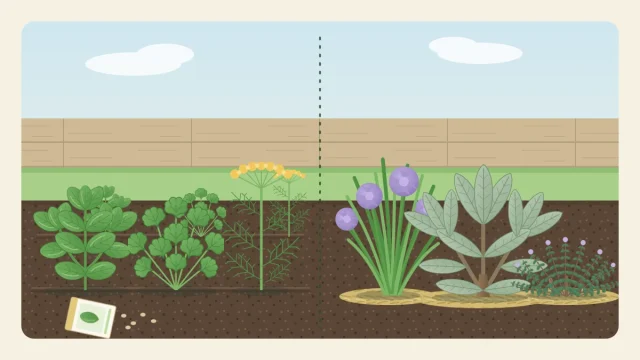
Some herbs are easy and inexpensive from seed. Basil sprouts readily, and cilantro and dill are usually sown directly where they will grow because they dislike having their roots disturbed. Woody herbs such as rosemary, thyme and sage are slower, so most beginners buy them as plants.
When to plant
Timing depends on where you live. The dates that matter are your average last frost in spring and first frost in fall, not a fixed day on the calendar. Your local extension office or weather service can tell you both.
Tender herbs such as basil are damaged by cold and should go outside only after the last frost, once nights have turned mild. Hardier herbs, including chives, thyme and parsley, tolerate cool weather and can usually be planted earlier in spring.
Good to know
Frost dates are averages. Keep an old sheet or a few upturned pots handy to cover tender herbs if a cold night is forecast after you have planted.
It also helps to know which herbs last a single season and which return. Basil, cilantro and dill are replanted each year, while chives, thyme, oregano and sage can stay in the same spot for several years. The guide to annual and perennial herbs sorts them out so you can decide what gets a permanent place.
Two groups that explain most care differences
Nearly all the differences in herb care come down to which of two rough groups a plant belongs to.
Mediterranean woody herbs
Rosemary, thyme, sage and oregano come from dry, sunny hillsides. They develop woody stems, prefer leaner soil and like to dry out somewhat between waterings. Rich, wet ground is where they struggle most.
Soft leafy herbs
Basil, parsley, cilantro and chives have softer stems and leaves and want steadier moisture. They wilt sooner in dry soil and generally appreciate a little more compost.
This is why it pays to plant each group together: the amount of water that suits a basil is wrong for a thyme.
Soil and water: two habits to learn
You do not need perfect soil. You need soil that drains, with some compost mixed in if it is very heavy or very sandy. The guide to the best soil for herbs explains how to check what you have and what to fix first.
Watering is the other habit, and it works by checking rather than by a calendar. How quickly soil dries depends on the weather, the soil, the size of the plant and whether it grows in the ground or in a pot. Push a finger into the soil near the plant. If it feels dry below the surface, the moisture-loving herbs are ready for a drink, while the woody Mediterranean group can wait longer. The full method is in the guide on how to water herbs.
A simple plan for your first season
- Find the sunniest spot within easy reach of the kitchen.
- Decide on a small bed or a few generous pots.
- Choose three to five herbs you cook with and note which group each belongs to.
- Loosen and improve the soil, or fill containers with fresh potting mix.
- Plant hardy herbs once the soil can be worked, and tender ones after your last frost.
- Check the soil with a finger before watering.
- Start harvesting lightly as soon as plants are growing strongly.
Expect a few surprises: cilantro may flower sooner than you hoped, and one plant may simply not take. That is ordinary. Keep the first garden small, watch what the plants show you, and add to it next year.
Frequently asked questions
Which herbs are easiest for a first garden?
Start with herbs you already cook with. Basil, parsley, chives, thyme and oregano are common first choices because they are widely sold as starter plants and respond well to regular cutting. Three to five kinds is enough to learn how sun, soil and moisture work in your own yard before you add more.
Is it better to grow herbs in the ground or in pots?
Both work. A bed gives roots more room and dries out more slowly, so it needs less frequent attention. Pots suit patios and paved areas, can be moved toward the sun and keep spreading herbs such as mint contained. Choose whichever lets you use your sunniest spot close to the kitchen.
Do all herbs need the same care?
Not quite. Woody Mediterranean herbs such as rosemary, thyme, sage and oregano prefer leaner soil that dries out between waterings. Soft leafy herbs such as basil, parsley, cilantro and chives want steadier moisture. Planting each group together makes it much easier to give both what they need.