Planning an Herb Garden: Site, Size and Layout
How to choose the right spot for herbs, decide how big the bed should be and arrange plants by height and water needs so every one gets light and can be reached.
A little thought before you dig saves a lot of moving plants later. Planning an herb garden mostly comes down to three questions: where the sun and water are, how much space you really need, and which herbs should sit next to each other.
None of it requires drawing skills or special tools. A walk around the yard at a few different times of day, a tape measure and a sheet of paper are enough to end up with a layout that suits both the plants and the cook.
Start with the sun
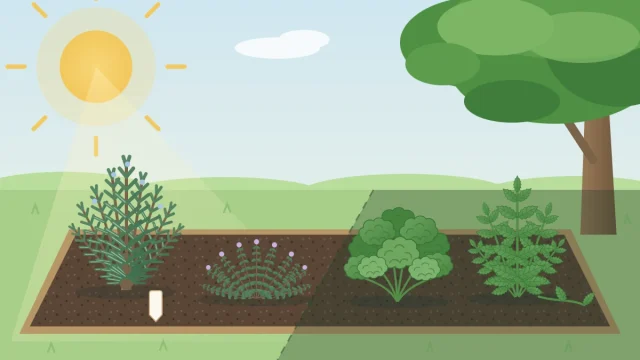
Light is the one thing you cannot add later, so let it choose the site. Most culinary herbs want full sun, meaning about six or more hours of direct sun a day. Look at the candidate spot in the morning, around midday and in late afternoon on a clear day, and note when it is in direct light and when a fence, tree or building shades it.
Remember that shadows change with the seasons. A bed that is bright in early spring can be shaded once nearby trees leaf out. If you are unsure whether a spot qualifies, the guide on how much sun herbs need explains how to count the hours and which herbs accept part shade.
Check drainage after rain
The second test costs nothing: go out after a good rain and look. Places where water stands for hours, or where the ground stays sticky long after the rest of the yard has dried, are poor choices for herbs, and especially for rosemary, thyme and sage.
Slightly higher ground, a gentle slope or the top of a low wall usually drains better than a dip. If your only sunny spot is a wet one, plan for a raised bed or containers instead of hoping the plants will adapt.
Stay close to the kitchen and the water
Convenience matters more than it sounds. Herbs a few steps from the kitchen door get picked while dinner is cooking; herbs at the far end of the yard are easy to forget. A spot you pass daily also means you notice dry soil, flower buds and pests early.
Check how far the nearest outdoor tap is, or how far you will carry a watering can. New plantings and pots need frequent checking in warm weather, and a long walk with a heavy can makes it easy to fall behind.
How big should it be?
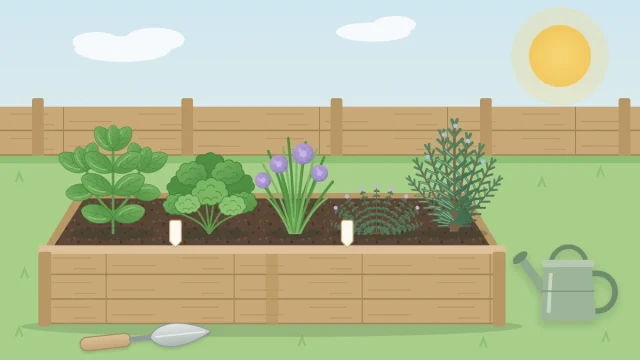
Smaller than you think. A bed of roughly 4 by 4 ft (1.2 by 1.2 m), or a few large pots, is plenty for a household. A single healthy thyme, oregano or sage plant supplies more than most kitchens use, and even basil and parsley, which are picked by the handful, need only a few plants each.
A modest bed has another advantage: you can reach the center from the edges. If you want more room, make the bed longer instead of deeper, keeping it narrow enough to reach the middle from either side without stepping in.
No ground to spare? A sunny patio works well too. See the guide to growing herbs in containers for pot sizes and potting mix.
Arrange herbs by height and water needs
Once the outline is settled, place the plants on paper before you place them in soil. Two things decide who goes where.
Height
Tall herbs such as rosemary, dill and sage belong at the back of a bed that is viewed from one side, or on its north side, so they do not shade low growers such as thyme and oregano. That direction assumes you garden in the Northern Hemisphere.
In a bed you can walk around, put the tallest plants in the center and step down toward the edges. Low, spreading herbs make a neat border and are easy to snip from the path.
Water needs
Height decides who gets the light; water needs decide who shares a corner. Two groups cover most kitchen herbs:
| Group | Herbs | What they prefer |
|---|---|---|
| Dry side | Rosemary, thyme, sage, oregano | Leaner soil that dries out between waterings |
| Moist side | Basil, parsley, cilantro, chives | Steadier moisture and a little more compost |
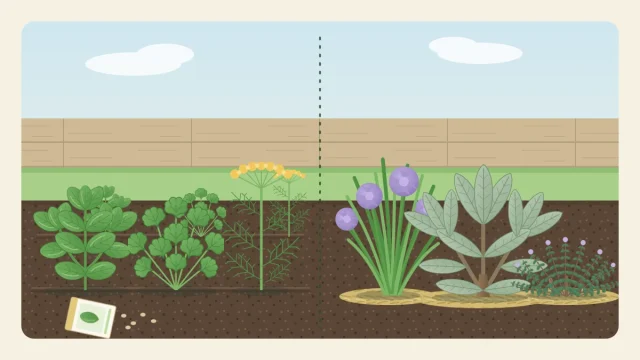
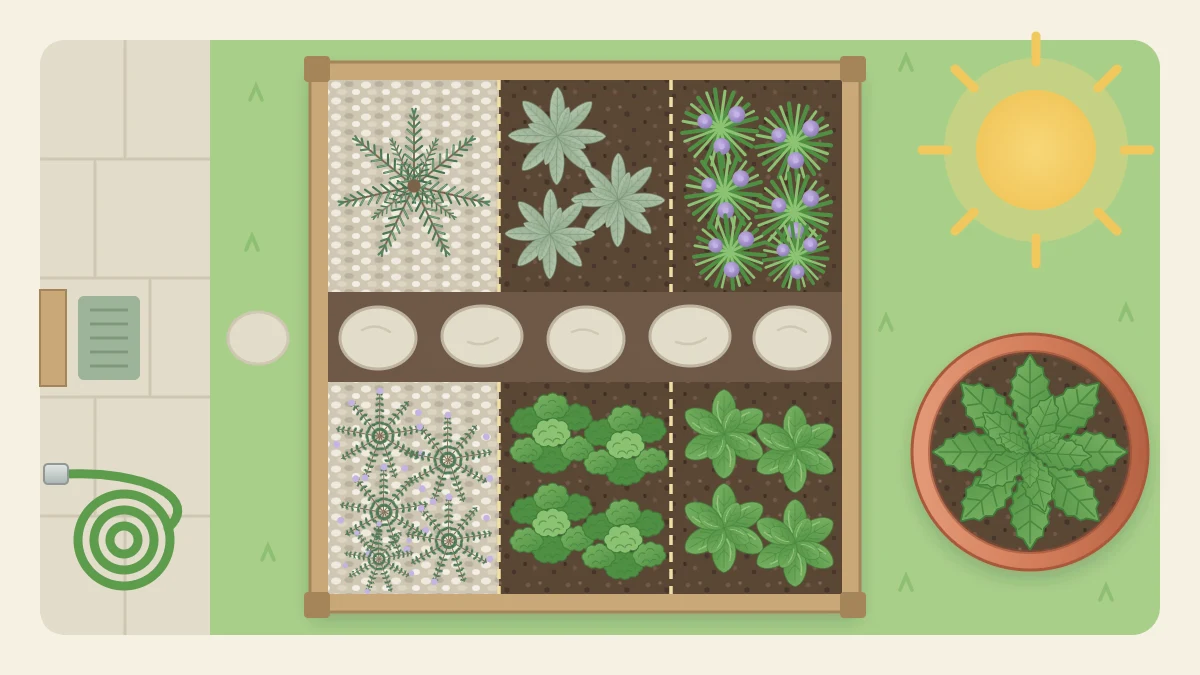
Keep each group together, with the dry-side Mediterranean herbs in the best-drained part of the bed. Then you can give one end more water than the other instead of settling on an amount that suits nobody.
Give every plant its mature width
Young herbs in small nursery pots look lost in an empty bed, and the temptation is to fill the gaps. Resist it. Check the plant label or seed packet for the mature width and space plants so their edges will just meet when fully grown.
Crowded herbs shade each other, stay damp after rain and are harder to harvest. Bare soil between new plants can be covered with a thin mulch for the first season, or used for a quick sowing of cilantro or dill that will be finished before the neighbors fill out.
Good to know
Mint spreads by underground runners and can push through a mixed bed within a season or two. Plan a container of its own for it from the start, set a little apart from the bed. The guide on growing mint without letting it take over covers the details.
Plan paths and access
Every plant should be reachable without stepping on the soil around it. Footsteps press the soil together, squeezing out the air spaces that roots and drainage depend on.
For a small bed, access from the edges is enough. In anything wider, add a few stepping stones or a narrow path through the middle. Flat stones, bricks or a strip of wood chips all do the job, and they give you somewhere dry to stand when you harvest after rain.
Put the plan on paper
- Sketch the outline of the bed and mark which side gets the most sun.
- Draw in the path or stepping stones.
- Mark the dry-side and moist-side areas.
- Add each herb as a circle the size of its mature width, tallest at the back or center.
- Draw the mint pot outside the bed.
- Count the circles to get your shopping list.
With the sketch done, you know how many plants to buy and where each one goes. The next job is the ground itself: the step-by-step guide on preparing a garden bed for herbs takes you from grass to a bed that is ready to plant.
Frequently asked questions
How much space does an herb garden need?
Less than most people expect. A bed of roughly 4 by 4 ft (1.2 by 1.2 m), or a few large pots, usually supplies a household. One plant each of thyme, oregano, sage and rosemary is often enough, with a few plants of heavily used herbs such as basil and parsley.
Which herbs should be planted together?
Group herbs that like the same moisture. Rosemary, thyme, sage and oregano prefer leaner soil that dries out between waterings, so they share a corner well. Basil, parsley, cilantro and chives want steadier moisture and make a second group. Mint is best kept in a container of its own because it spreads.
Where is the best place for an herb bed?
Look for a spot that gets about six or more hours of direct sun, drains well after rain and sits close to the kitchen door and a water source. A convenient bed gets harvested and checked far more often than one at the far end of the yard.