How to Grow Rosemary Outdoors: Sun, Drainage and Cold
Rosemary thrives in sun and dry, well-drained soil, but winter decides how you grow it. Learn when to plant it in the ground, when to use a pot and how to avoid overwatering.
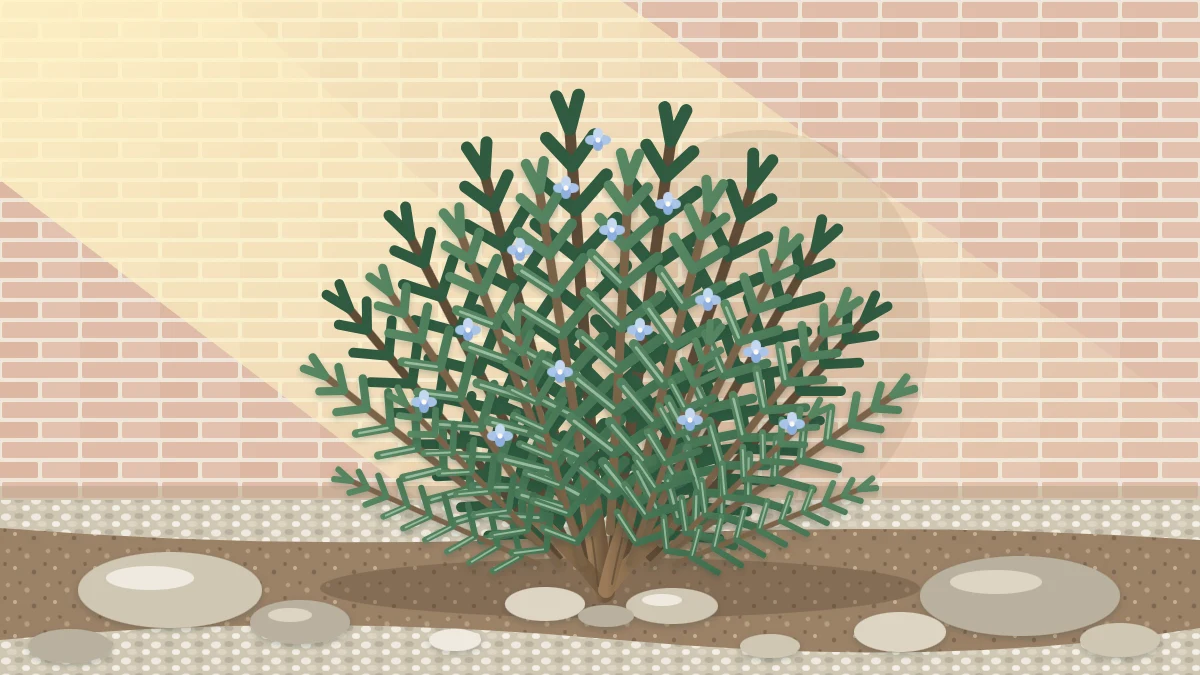
Rosemary raises one question before any other: will it survive winter where you live? In a mild climate it can grow into a shrub that lasts for years. In a cold one it needs a different plan from the day you buy it.
This guide explains how to grow rosemary outdoors with that question in mind. It covers the sun and drainage the plant needs everywhere, then the choices that depend on your winter.
What kind of plant rosemary is
Rosemary (Salvia rosmarinus, formerly Rosmarinus officinalis) is an evergreen woody shrub with narrow, needle-like leaves. You may still see the older name on plant labels.
According to the NC State Extension profile for rosemary, it is listed for USDA zones 8 to 10 and does best in light, well-drained, dry to medium soil in full sun. It tolerates drought once established and has low tolerance for wet, humid conditions and heavy clay.
Put simply, rosemary wants a bright, airy, dry-footed place. Most trouble traces back to missing one of those three.
Find your zone first
Look up your hardiness zone on the USDA Plant Hardiness Zone Map. Then decide which of three approaches fits you.
| Your situation | Approach |
|---|---|
| Within the listed zones | Plant in the ground in a sunny, well-drained spot |
| Colder than the listed zones | Grow in a pot and move it to shelter for winter |
| Colder, with nowhere to shelter a pot | Treat it as an annual and replant each spring |
Zones are a rough guide, not a promise. A plant against a warm wall in free-draining soil may come through a winter that would finish the same plant in an open, soggy bed. Cold combined with wet soil is harder on rosemary than cold alone.
Good to know
Some rosemary varieties are sold as hardier than others. If you garden near the cold edge of the listed zones, read the plant label and ask your local nursery which kinds have come through winters in your area.
Sun, air and drainage
Choose the sunniest spot you have. Full sun means about six or more hours of direct sun a day. In less light, rosemary grows thin and stretched.
Air movement matters as well, especially in humid climates. Leave space around the plant instead of crowding it between leafy neighbors, so the foliage dries quickly after rain.
Drainage is the third requirement. Light, sandy or gravelly soil suits rosemary. Heavy clay does not, because it holds water around the roots. If that describes your ground, plant on a mound or in a raised bed, or use a container. The guide to the best soil for herbs shows how to test drainage and improve it.
Buy a plant
Rosemary seed is slow to germinate and slow to grow on, so a starter plant is the practical choice. Pick one with dense green foliage all the way down the stems and no blackened tips. Slide it from its pot if you can. Roots should be pale and firm, not brown and soft.
Varieties differ in shape, from upright to trailing. Upright kinds are the easiest to cut straight sprigs from.
Planting in the ground or in a pot
Plant in spring after your last frost so the shrub has a full season to root before winter. Set the root ball level with the surrounding soil, or slightly raised in ground that drains slowly, and firm it in. In mild climates rosemary in the ground can become a shrub several feet tall, so check the label for mature size and give it room.
For a pot, choose one with drainage holes that is a little wider than the root ball, and fill it with a free-draining potting mix. A pot you can lift, or one on a wheeled stand, makes the fall move much easier. The step-by-step guide on how to plant an herb container covers the potting method.
Watering: the common mistake
Overwatering is the common mistake with rosemary. The plant gives little warning, and by the time needles brown from the base the roots may already be damaged. Dry soil can cause browning too, so check before assuming. Push a finger into the soil. Wet and sour-smelling points one way; dusty and pulling from the pot’s edge points the other.
New plants do need regular attention while they root in. Check the soil and water when the top inch or two (2.5 to 5 cm) has dried. Once established, a rosemary in the ground needs water sparingly and often gets by on rainfall. Potted plants dry out faster, so keep checking them, but let the mix dry between waterings.
Feeding is rarely needed in the ground. For a plant that has lived in the same pot for a long time, use a fertilizer labeled for edible plants at the label rate.
Getting through winter
Within the listed zones, an established plant in well-drained soil usually needs no special care. Avoid hard cutting in fall, since soft new growth is more easily damaged by cold.
In colder zones, move a potted rosemary to shelter before your first hard freeze. A bright, cool, frost-free place suits it better than a warm room, and it needs far less water while growth is slow. The guide to overwintering herbs explains timing, shelter options and how to move the plant back out in spring.
If you treat rosemary as an annual, harvest it freely as the season ends.
Harvesting without harming the shrub
Cut sprigs from the soft, flexible growth near the stem tips. These have the most tender leaves, and the plant branches again from below the cut.
- Cut just above a set of leaves or a side shoot.
- Leave green foliage on every stem you cut.
- Do not cut into bare old wood. It seldom sprouts new growth.
- Take a little from all around the plant to keep its shape even.
Regular light harvesting doubles as pruning and keeps a young plant bushy. A woody sprig or two goes a long way with roasted potatoes or grilled meat, so even a small shrub supplies a kitchen well.
Frequently asked questions
Will rosemary survive winter outside?
It depends on your climate and your soil. Rosemary is listed for USDA zones 8 to 10, and cold combined with wet ground is harder on it than cold alone. In colder zones, grow it in a pot you can move to a bright, frost-free shelter, or replant each spring.
Why is my rosemary turning brown?
Browning has more than one possible cause. Soil that stays wet is a common one, but a pot that has dried out completely and cold damage can look similar. Feel the soil a few inches down and check the roots. Soft brown roots suggest too much water; a dusty, shrunken root ball suggests too little.
Can I cut rosemary back hard?
Avoid it. Rosemary seldom sprouts from bare old wood, so a stem cut below its green foliage may stay bare. Keep the shrub in shape with regular light cuts into soft growth, always leaving leaves on the stem, and spread the cuts around the whole plant.