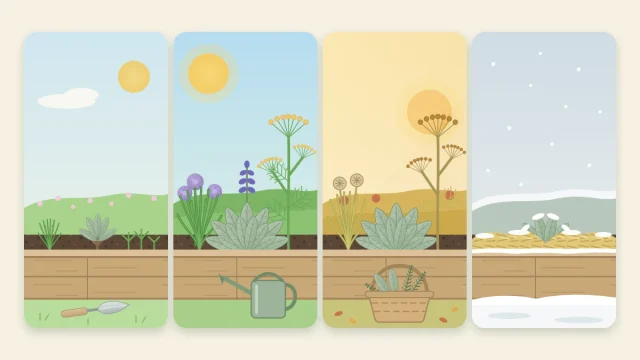
Overwintering Herbs: Protecting Perennials from Cold
How to bring perennial herbs through winter: why drainage matters more than cold, when and how to mulch, and what to do with rosemary and potted herbs.
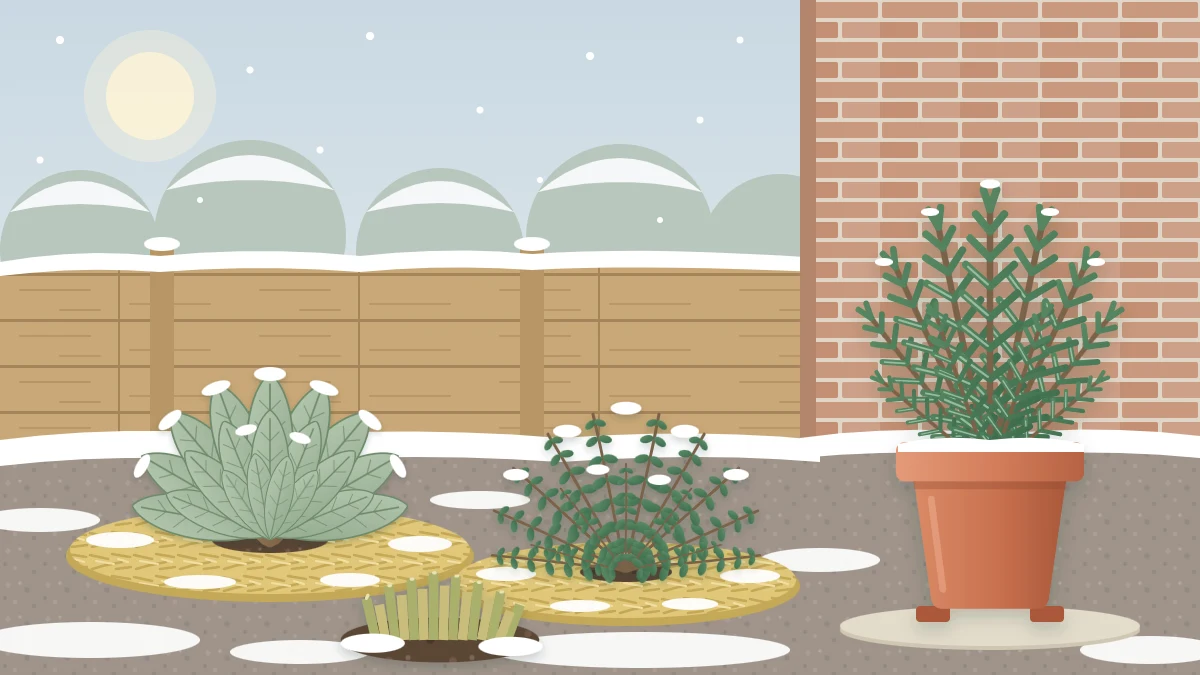
Perennial herbs are meant to come back each spring, yet every year some gardeners find a gray, lifeless thyme or a brown rosemary where a healthy plant stood in fall. Overwintering herbs successfully is less about wrapping plants up and more about understanding what actually harms them.
Three things decide what survives: the herb itself, your hardiness zone and, above all, how wet the soil stays through winter. Get the last one right and much of the work is already done.
What decides whether an herb survives
Start with the plant. Each perennial herb is listed for a range of USDA hardiness zones, which is a rough guide to the winter cold it usually tolerates. Find your own zone on the USDA Plant Hardiness Zone Map, then compare it with the range on the plant label.
Treat that comparison as a starting point, not a promise. Your own yard has warmer and colder corners, and winters vary.
Then look at drainage. Cold, wet soil kills more Mediterranean herbs than cold alone. Rosemary, thyme, sage and oregano come from places with dry, stony ground, and roots that sit in saturated soil for weeks are far more likely to rot than roots in soil that is cold but well drained.
Hardy perennials need little help
Chives, mint, oregano, sage and thyme, grown within their listed zones, mostly need tidy, well-drained ground and to be left alone.
Chives and mint die back to the ground when hard frost arrives. This is normal. The roots are alive below the surface and resprout when the soil warms, so mark where they are and do not dig the spot over. For more on that yearly cycle, see the chives growing guide.
Thyme, sage and oregano keep some woody stems and sometimes a few leaves through winter. They can look tired by late winter, with bronzed or dry foliage, and still be perfectly alive. Wait for new growth in spring before you decide what to remove.
| Herb | Winter habit | What it needs |
|---|---|---|
| Chives, mint | Die back and resprout | Undisturbed, well-drained ground |
| Thyme, sage, oregano | Woody stems persist | Dry crowns; loose mulch around the plant in cold areas |
| Rosemary | Evergreen, cold-sensitive | Sheltered spot, or a pot moved under cover |
| Basil | Ends with frost | Resow next year |
Late summer: let growth harden
Winter preparation begins while the weather is still warm. Stop fertilizing and stop hard pruning by late summer. Both push plants to make soft new shoots, and tender growth that appears late in the season has no time to toughen before frost arrives.
You can keep picking sprigs for the kitchen. Save any major reshaping for spring.
This is also the moment to fix drainage problems. If water pools around a sage or thyme after rain, move the plant to higher ground or a raised bed while the soil is still warm enough for roots to settle. For the wider list of fall jobs, see the seasonal herb garden checklist.
How and when to mulch for winter
Winter mulch works differently from summer mulch. Its purpose is to keep frozen ground evenly frozen, because repeated freezing and thawing can heave shallow-rooted plants out of the soil and expose their roots.
That is why timing matters. Apply winter mulch after the ground begins to freeze, not before. Put down too early, it holds warmth and moisture around the crown and invites rot and nesting rodents.
- Choose a loose, airy material such as straw or evergreen boughs. Avoid anything that mats into a wet layer.
- Place it around the crowns, not on top of them. A woody herb buried under damp mulch can rot at the base.
- Pull the mulch back in spring as the weather settles, so the soil can warm and new shoots get light.
Good to know
Heavy, wet mulch piled against the stems of thyme, sage or rosemary can do more harm than a cold night. If in doubt, use less, and keep the center of the plant open to the air.
NC State Extension gives more detail on fall preparation and mulching in its guide to winterizing the herb garden.
Rosemary needs extra thought
Rosemary is the herb most often lost in winter. It is listed for USDA zones 8 to 10, so in much of the country it sits beyond its usual range once real cold arrives.
Within those zones, give it a sheltered spot: a position near a sunny wall, out of drying winter wind, in soil that drains fast. In the Northern Hemisphere a south- or west-facing wall holds the most warmth.
In colder zones, grow rosemary in a pot and move it before hard frost to a cool, bright, frost-free place, such as an unheated porch or a garage with a window. Cool is the point. A warm, dry living room suits it poorly. Water sparingly over winter, only when the mix has dried well below the surface, and move the pot back out after your last frost. The rosemary growing guide covers its year-round care.
Protecting herbs in containers
Roots in a pot are more exposed than roots in the ground. The soil of a garden bed insulates them, but a container is surrounded by cold air on every side, so a perennial that is fine in your bed may not survive the same winter in a pot.
- Group pots against a wall. Clustered together beside a house wall, they shelter one another and gain a little stored warmth.
- Raise them off wet ground. Pot feet or bricks keep drainage holes clear so water cannot freeze the pot to a saucer or pool around the roots.
- Move them to shelter. An unheated garage, shed or covered porch takes the edge off the hardest weather. Check the mix now and then and water lightly if it is dry all the way down.
What not to overwinter
Tender basil is not overwintered outdoors. It is an annual that blackens at the first frost, and no amount of mulch changes that. Take a final harvest before a cold night is forecast, clear the plants away and resow next year once frost has passed.
Uncovering in spring
Be patient at the other end of winter. Remove mulch gradually as the weather settles, and wait for new growth before cutting anything back. A sage or thyme that looks dead in late winter often breaks into leaf from low on its stems a few weeks later.
If a plant shows no new growth well after its neighbors have started, scratch a stem lightly with a fingernail. Green beneath the bark means it is alive. Brown and brittle all the way down means it is time to replace it, ideally in a spot with better drainage.
Frequently asked questions
Should I cut back herbs before winter?
Not hard. Heavy pruning in fall encourages soft new shoots that frost damages easily, and old stems give the crown a little shelter. Remove dead annuals and any diseased foliage, pick lightly if you need sprigs, and save real cutting back for spring once new growth shows you where the live wood is.
Will my rosemary survive winter outside?
It depends on where you live and where it is planted. Rosemary is listed for USDA zones 8 to 10, and even there it does best in a sheltered, fast-draining spot. In colder zones the usual approach is to grow it in a pot and move it to a cool, bright, frost-free place before hard frost.
My thyme looks brown after winter. Is it dead?
Not necessarily. Thyme often looks dry and bronzed by late winter and then sprouts from the lower stems once the weather warms. Wait a few weeks, then scratch a stem with a fingernail. Green under the bark means it is alive. If every stem is brown and brittle, the plant has probably died, often from wet soil.