Herb Garden Care by Season: A Year-Round Checklist
A season-by-season checklist of herb garden jobs, from spring cleanup and dividing to summer pinching, fall harvests and winter protection.
An herb garden does not need much work, but it does need the right job at the right time. Cut back a sage too late in the year, or set basil out too early, and the plant pays for it. Thinking about herb garden care by season gives you a short list for each part of the year instead of one long list of chores.
The tasks below are tied to seasons and conditions, not calendar dates. Spring arrives weeks earlier in a mild coastal garden than in a cold northern one, so watch your own frost dates, soil and plants and let them set the pace.
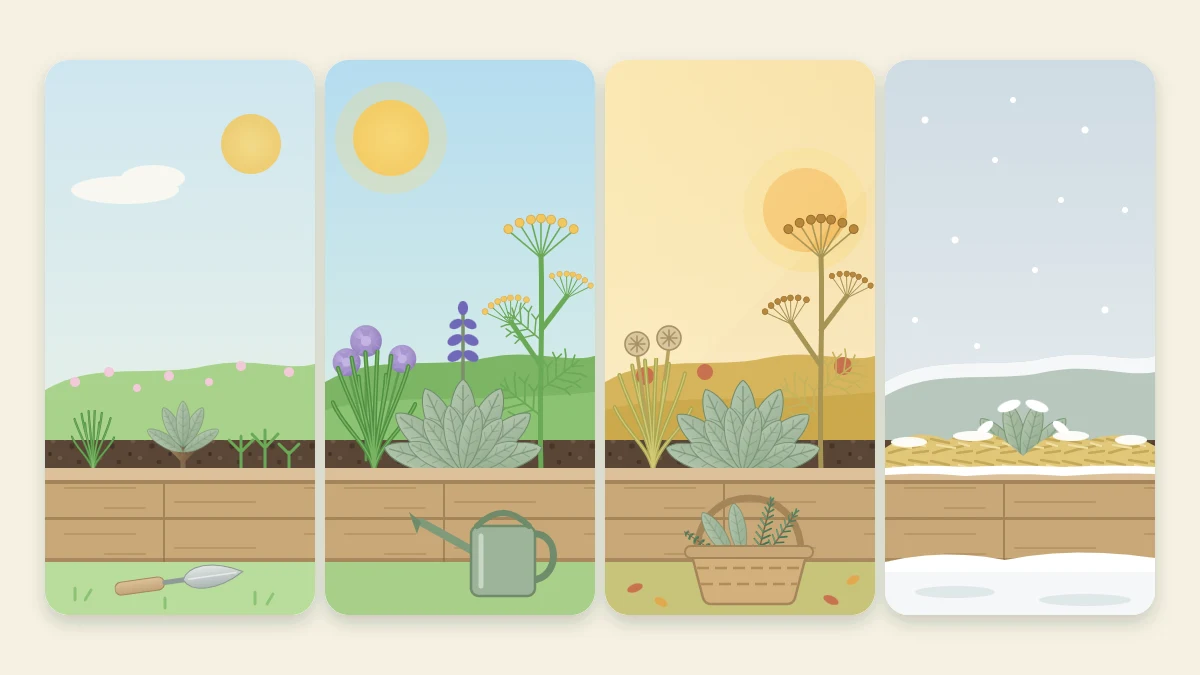
The year at a glance
| Season | Main jobs |
|---|---|
| Early spring | Clear debris, cut back dead stems, divide clumps, add compost, sow cool-season herbs |
| Late spring to summer | Plant tender herbs after frost, mulch, check moisture, pinch, harvest, resow, watch for pests |
| Fall | Last big harvests, stop hard pruning, collect seed, plant or divide in mild regions, tidy lightly |
| Winter | Protect marginal plants, shelter potted rosemary, plan and order seed |
Your local climate decides when each row begins. The USDA Plant Hardiness Zone Map shows the hardiness zone for your area, which is a rough guide to how cold your winters get and which perennial herbs are likely to come back.
Early spring: wake the garden up
Begin when the soil has thawed and is dry enough to crumble in your hand. Working wet soil compacts it, so a few days of patience helps.
- Clear winter debris. Rake away matted leaves and pull back winter mulch from plant crowns so light and air reach the new shoots.
- Cut back dead stems once new growth shows. On perennials such as sage, thyme and oregano, wait until you can see fresh green, then trim just above it. Cutting before you can tell live wood from dead risks removing stems that would have recovered.
- Divide chives and oregano. Lift crowded clumps, split them into sections and replant with fresh spacing.
- Top up compost. Spread a thin layer of finished compost around established plants and over empty ground.
- Sow cool-season herbs. Cilantro, dill and parsley handle cool weather and can go in while tender herbs still have to wait.
For how to work out your own timing from your last frost, see the guide to when to plant herbs.
Late spring into summer: plant, pinch and pick
This is the busy season, and most of the work is light and frequent.
- Plant tender herbs after frost. Basil goes out once frost danger has passed and the nights have warmed. Harden off transplants before they face full sun and wind.
- Mulch. A layer of mulch around leafy herbs holds moisture and keeps weeds down. Keep it thin and pulled back from the stems of thyme, sage and rosemary, which prefer dry crowns.
- Check soil moisture. Push a finger into the soil before you water. Need varies with heat, wind, rain and whether the plant is in the ground or in a pot.
- Pinch and harvest regularly. Frequent light picking keeps plants bushy. The harvesting guide shows where to cut and how much to take.
- Remove flower buds on basil. Pinching them out as they form keeps the plant making leaves for longer.
- Resow cilantro and dill in cool spells. Both bolt in heat, so make small repeat sowings whenever the weather turns mild.
- Watch for pests. Look under leaves while you pick. Catching a few insects early is far easier than dealing with many.
When something looks wrong, resist guessing from one symptom. Yellow leaves or wilting can have several causes, and the guide to common herb garden problems walks through the checks that tell them apart.
Fall: gather in and slow down
As days shorten and nights cool, the aim shifts from pushing growth to letting plants settle.
- Take the last big harvests of annuals before frost. Basil blackens at the first frost, so cut it when a cold night is forecast. Dry or freeze what you cannot use fresh.
- Stop hard pruning of perennials. Heavy cutting prompts soft new growth that has no time to toughen before cold weather. Light picking for the kitchen is fine.
- Collect seed. Gather ripe seed heads from cilantro, dill and basil on a dry day.
- Plant or divide hardy perennials in mild regions. Where winters are gentle, fall gives roots time to establish in cool, moist soil. In cold regions, leave this job for spring.
- Tidy, but leave some stems. Clear diseased leaves and spent annuals. Standing stems on healthy perennials give the crowns a little shelter, and you can cut them back in spring.
Winter: protect and plan
The garden asks little in winter, but two jobs matter in cold climates.
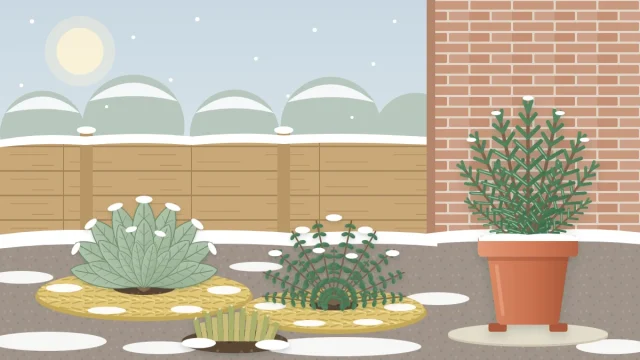
- Protect marginal plants. Herbs growing near the cold edge of their listed range benefit from a loose mulch around the crown and a spot out of the wind.
- Move potted rosemary to shelter in cold zones. Where winters are harsher than rosemary tolerates, bring the pot to a cool, bright, frost-free place.
- Plan and order seed. Note what you ran short of and what you grew too much of, sketch next year’s layout and order seed while the choice is wide.
Drainage matters as much as temperature at this time of year. The guide to overwintering herbs explains mulching, shelter and care of containers in detail.
Good to know
A warm spell in late winter can tempt you to uncover and cut back early. Hard frost often returns, so leave winter protection in place until new growth is clearly under way.
Adjusting the checklist to your climate
The order of jobs stays the same wherever you garden, but the seasons stretch and shrink.
In regions with long, hot summers, cool-season herbs such as cilantro and parsley do their best work in fall, winter and early spring, and midsummer becomes the quiet period. In regions with short summers, the window between last and first frost is narrow, so planting tender herbs promptly after frost matters more.
Containers run ahead of the ground in both directions: they warm sooner in spring, dry faster in summer and chill faster in fall. Check them first whenever the weather changes.
Keep a simple garden record
A few notes each year turn this general checklist into one that fits your own garden. Write down the dates of your last spring frost and first fall frost, when each herb went in, when cilantro bolted and which perennials came back.
Frequently asked questions
When should I cut back perennial herbs in spring?
Wait until you can see new growth, then trim dead stems back to just above the fresh green. Cutting earlier is risky because live and dead wood look alike in late winter, and a late frost can damage plants that have just been opened up. The right moment varies with your climate and the year.
Is fall a good time to plant herbs?
It depends on your winters. In mild regions, hardy perennials such as thyme, oregano and chives often establish well in the cool, moist soil of fall. In cold regions there may be too little time for roots to settle before the ground freezes, so spring planting is usually the safer choice there.
Should I clear the whole herb bed before winter?
A light tidy is enough. Remove spent annuals and any diseased leaves, but leave healthy stems standing on perennials such as sage and thyme. They give the crown a little shelter through the cold months and show you where the plants are. Cut them back in spring once new growth appears.