How to Grow Sage: A Hardy Herb for Dry, Sunny Spots
Culinary sage stays full and leafy when it has sun, dry feet and a spring prune. This guide covers siting, spacing, first-year care and where not to cut.
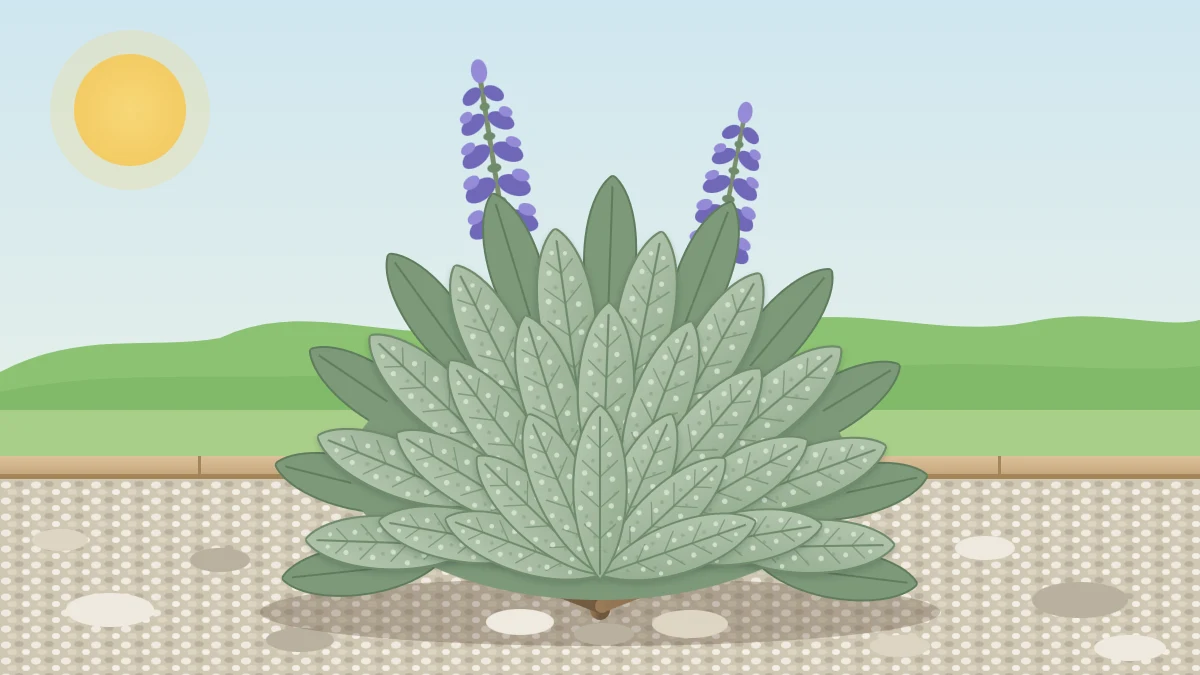
A young sage plant is a handsome thing: a rounded bush of soft, gray-green leaves. A few years on, many have become a tangle of bare woody stems with a tuft of leaves at each end. The difference is mostly down to siting and a little timely pruning.
This guide covers how to grow sage as a culinary herb so it stays leafy for as long as the plant naturally lasts, and what to do when it finally runs out of steam.
What kind of plant sage is
Common sage (Salvia officinalis) is a short-lived, bushy, semi-woody perennial. Semi-woody means the base of the plant hardens into wood over time while the upper growth stays soft. It is listed for USDA zones 4 to 8, which is a rough guide to winter cold and not a promise for every garden.
According to the NC State Extension profile for common sage, it prefers full sun and well-drained, medium to dry soil. It tolerates drought and poor soil, and it is intolerant of wet or poorly drained ground.
That last point matters most. Sage forgives thin soil and missed waterings far more readily than it forgives wet feet.
Pick a dry, sunny spot
Give sage full sun, about six or more hours of direct sun a day. With less, stems stretch toward the light and the bush opens up sooner.
Then check drainage. Good places for sage include a raised bed, the top of a slope, a strip beside a sunny path, or any bed where water soaks away soon after rain. Avoid low spots and places where a downspout empties. If your soil is heavy, raise the planting area or use a large container with potting mix.
There is no need to enrich the soil. Sage grown lean tends to be more compact and more aromatic than sage pushed along with rich compost and fertilizer.
Planting
Start with nursery plants. They establish quickly and give you leaves to pick in the first season. Plant after your last spring frost, setting each root ball level with the soil surface.
Space plants about 18 to 24 in (45 to 60 cm) apart. That looks generous beside a small starter plant, but sage fills out, and air moving between plants helps the dense, textured leaves dry after rain.
Water each plant in well. For the first weeks, check the soil with a finger and water when the top inch (2.5 cm) is dry. As new growth appears, water less often. An established sage in the ground usually needs help only in a long dry spell, while one in a pot needs checking more regularly.
Tip
A mulch of gravel or small stones suits sage better than a thick layer of bark. It keeps the lower leaves off damp soil and does not hold water against the base of the stems.
Go easy in the first year
Harvest lightly in the first year while the plant establishes. A new sage needs its leaves to build roots and a framework of branches.
Pinching out a few stem tips is helpful at this stage, because each pinched tip branches and makes the bush fuller. Save larger harvests for the second year onward, and even then leave plenty of foliage on the plant.
Prune to keep it leafy
Pruning is what stands between a full sage bush and a leggy one. The plan is simple.
- Prune in spring. Wait until new growth shows on the stems, so you can see which parts are alive. Cut each stem back to just above a pair of fresh shoots or leaves.
- Trim during the season. Shorten stems that are stretching, and cut back flowered stems once the blooms fade.
- Stay in the leafy part. Do not cut into mature bare wood, which seldom resprouts.
- Slow down as fall approaches. Stop trimming several weeks before your first fall frost so tender regrowth is not caught by it.
The guide on how to prune herbs explains where to place each cut and why woody herbs are handled differently from soft ones.
You can let sage bloom if you like. The violet-blue flower spikes are attractive, and trimming afterward brings the plant back to leaf.
Harvesting for the kitchen
Pick individual leaves as you need them, or cut short sprigs from the stem tips just above a leaf pair. Young leaves near the tips are the most tender.
Sage is strongly flavored, so a little is enough. It is a classic partner for poultry, pork, beans and browned butter. Because the plant is evergreen in many climates, you can often pick a few leaves outside the main growing season, though growth slows a great deal in cold weather.
Colored-leaf kinds and winter
Besides the common gray-green plant, there are purple, golden and variegated kinds. They taste similar and look striking in a bed or pot. They may be less hardy than the plain form, so read the plant label and give them your most sheltered, best-drained spot.
If you garden near the cold edge of the listed zones, or grow a colored-leaf kind, some winter protection is worth planning. See the guide to overwintering herbs for the options.
When sage declines
Sage is short-lived. Plants often decline after several years, with more wood, fewer leaves and stems that split or sprawl. Good pruning delays this, but it does not stop it.
When a plant reaches that stage, replace it. Put the new plant in a slightly different spot if you can, and start the pruning routine in its first spring. Many gardeners keep one younger plant coming along so there is never a gap.
Sage and rosemary like similar conditions, with sun and soil that drains freely. If you have a dry, bright corner, the guide on how to grow rosemary will help you decide whether the two can share it in your climate.
Frequently asked questions
Why is my sage plant woody and sparse?
Several things can contribute: too little sun, no regular pruning, or simply age, since sage is a short-lived plant that often declines after several years. Check how many hours of direct sun it gets and whether it has been trimmed each spring. An old, mostly bare plant is best replaced.
When should I prune sage?
Do the main pruning in spring, once new growth shows on the stems, cutting back to just above fresh shoots. Trim lightly through the season to stop stems stretching. Keep every cut within the leafy part of the stem, because mature bare wood seldom resprouts.
Can I harvest sage in its first year?
Yes, but lightly. A new plant needs most of its leaves to establish roots and branches. Pinching a few stem tips is helpful, since it makes the bush fuller. Leave bigger harvests for the second year onward, and always leave plenty of foliage behind.