How to Grow Basil: Planting, Pinching and Care
A complete guide to sweet basil outdoors: when it is warm enough to plant, how to keep the soil evenly moist, and how pinching keeps the plant leafy until frost.
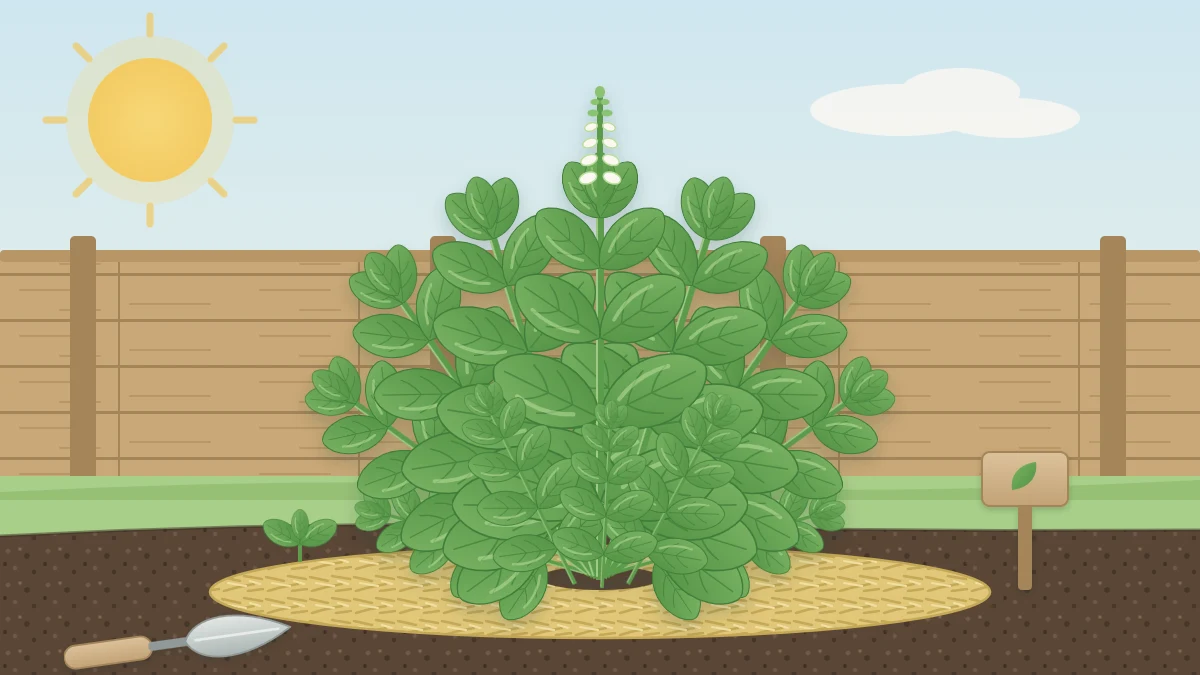
Basil is the herb most people plant first and lose first. It sulks in a chilly spring, races to flower in midsummer and turns black on the first frosty night. None of that is bad luck. It is simply how a plant from the tropics behaves in a garden with seasons.
Once you understand that, how to grow basil comes down to three things: warmth at planting time, steady moisture, and regular pinching so the plant keeps making leaves instead of flowers. Get those right and one or two plants can supply a kitchen for the whole warm season.
What basil needs
Sweet basil (Ocimum basilicum) is a frost-tender herb from tropical regions, grown in most gardens as a warm-season annual. It prefers full sun and moist, well-drained soil, as described in the NC State Extension profile for basil.
- Light: full sun, which means about six or more hours of direct sun a day.
- Soil: moist but well-drained. Soil that stays soggy is as much of a problem as soil that dries out.
- Warmth: basil grows fast in warm weather and stalls in cool weather.
- Life cycle: one season. Frost ends it.
Working some finished compost into the bed before planting helps the soil hold moisture and still drain.
When to plant basil
Timing is where most basil goes wrong. Plant seed or transplants only after your last spring frost, and then wait a little longer until the nights are reliably mild. Cold damages basil even when there is no frost. A plant set out too early may sit without growing or develop dark, damaged leaves.
There is no prize for being first. Basil planted into warm soil a couple of weeks later often overtakes basil that was planted early and chilled. To work out the right window for your area, see the guide on when to plant herbs.
Good to know
Starter plants raised under cover are soft. Harden them off over about a week, giving them a little more time outside each day, before you plant them in the garden.
Planting seed or transplants
Both methods work well, and basil is one of the easier herbs to raise from seed.
From transplants
Water the starter plant, ease it out of its pot and set it in the ground at the same depth it was growing. Firm the soil gently around the root ball and water it in. Space plants roughly 12 in (30 cm) apart or more. That looks generous at first, but a well-pinched basil fills the gap, and air moving between plants helps the leaves dry after rain.
Store-bought pots often hold several seedlings crowded together. You can gently separate them into two or three clumps and plant each one on its own.
From seed
Direct sow into warm soil after the last frost, following the depth on the seed packet. Keep the surface moist until the seedlings are up, then thin them to the same spacing. You can also start seed inside a few weeks ahead and plant the seedlings out once the weather has settled.
Watering and mulch
Basil has soft, thin leaves and wilts quickly when the soil dries, so aim to keep the soil evenly moist. Check it with a finger and water when the top inch (2.5 cm) feels dry. How often that happens depends on your soil, the weather and the size of the plant, so let the soil tell you, not the calendar.
- Water at the base of the plant, not over the leaves.
- Spread a layer of mulch around the plants once the soil has warmed. It slows drying and keeps soil from splashing onto the leaves.
- Basil in a container dries out faster than basil in the ground, so check pots more often in hot weather.
Pinching for a bushy plant
Left alone, basil grows as one tall stem, flowers and winds down. Pinching changes that. When a young plant has several leaf pairs, pinch or cut the stem tip just above a leaf pair. Two new shoots grow from that node, and each can be pinched again later.
Keep watching for flower buds. They appear at the stem tips as tight, layered clusters. Pinch them out as soon as you see them, taking the tip down to the next leaf pair. Once basil is allowed to flower freely, it makes fewer and smaller leaves.
The same cut works on other branching herbs, and the guide on how to prune herbs explains it step by step.
Harvesting through the season
Harvest from the top down. Take stem tips, cutting above a leaf pair, instead of pulling the big leaves off the lower stem. Those lower leaves keep feeding the plant, and each cut at the top makes it branch again. In practice, harvesting and pinching are the same job.
Take no more than about a third of the plant at one time, and let it regrow before the next big picking. Basil is a classic partner for tomato dishes, so a plant near the kitchen door tends to get pinched often, which suits it well. For timing and handling, see how to harvest herbs.
Tip
Watch the forecast as the season closes. The first frost ends the plant, so harvest it fully beforehand. Leaves that have been frosted turn dark and limp and cannot be saved.
Problems to know about
Basil is usually easy, but a few troubles are worth recognizing.
- Basil downy mildew. Leaves yellow between the veins, often with gray fuzz on the underside. Yellowing has other causes too, so check the undersides before deciding. Varieties sold as resistant are available and are the simplest answer where this has been a problem.
- Fusarium wilt. A soil-borne disease that can make a plant wilt and collapse although the soil is moist. Resistant varieties are sold for this as well. Remove affected plants and grow basil in a different spot next time.
- Aphids. Small soft insects clustered on shoot tips now and then. A firm spray of water knocks most of them off.
- Japanese beetles. Occasional visitors in the regions where they live, leaving leaves with a lacy look. Hand-pick them into a container of soapy water.
If you consider any pesticide, check that the label lists your pest and edible herbs, and follow the label exactly.
Frequently asked questions
Why does basil flower so soon?
Flowering is the natural next stage for basil as summer goes on, and an unpinched plant reaches it quickly. Pinch out each flower bud as it appears, cutting down to the next leaf pair. The plant responds with new side shoots and keeps producing leaves for longer.
Can I plant basil before the last frost if I cover it?
It is rarely worth it. Basil is damaged by cold as well as by frost, so a covered plant may survive but sit without growing. Waiting until nights are reliably mild usually gives a stronger plant that soon catches up with any that were planted early.
Does basil come back the next year?
Not in a garden with frost. Sweet basil is grown as a warm-season annual, and the first frost ends the plant. Harvest it fully before that night arrives, and start again with fresh seed or new starter plants once the following spring has warmed up.