When to Plant Herbs: Frost Dates and Soil Warmth
Herb planting time depends on your frosts, not the calendar. Learn how to find your frost dates, and when hardy perennials, cool-season herbs and tender basil should each go outside.
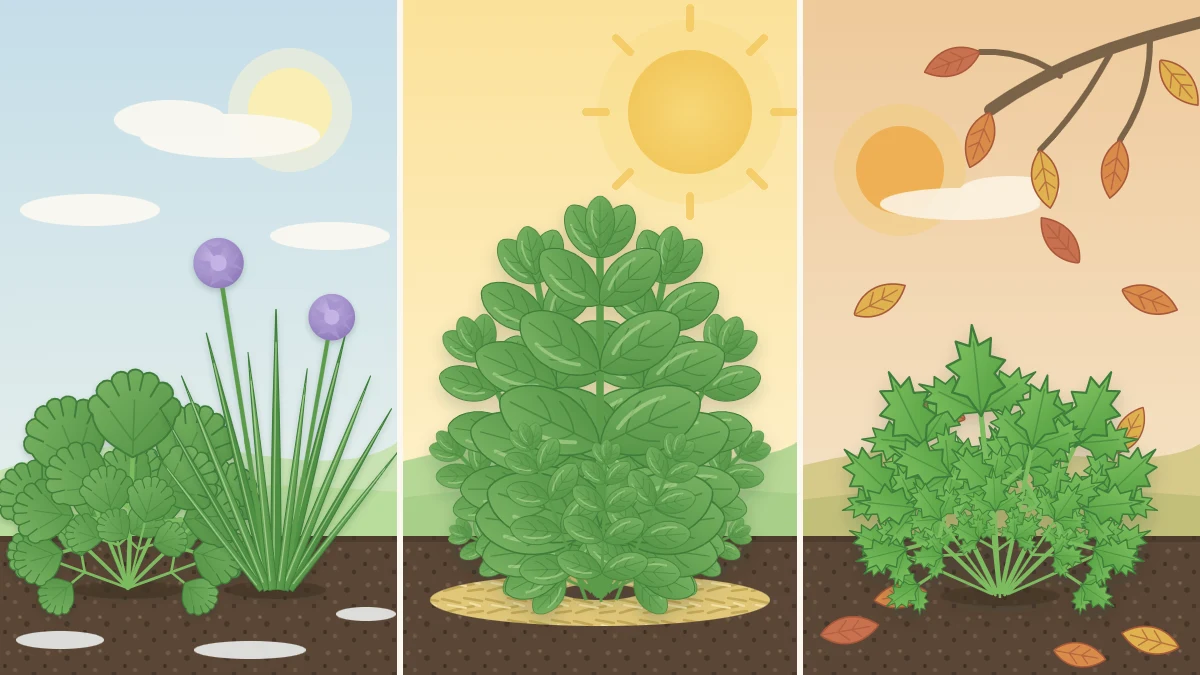
Ask ten gardeners when to plant herbs and you may hear ten different dates, and every one of them could be right for the place it came from. Planting time is local. It follows the weather where you live, not a fixed day on the calendar.
Two pieces of information do most of the work: your average frost dates and how warm the soil and nights have become. Once you know those, you can sort any herb into one of three groups and plant it at the right moment.
Why the calendar is a poor guide
Spring arrives weeks earlier in a mild coastal or southern garden than in a cold northern or mountain one. Advice that names a date without naming a place will be too early for some readers and too late for others.
Frost is the real dividing line. Some herbs shrug off a light frost, and others are damaged by a single cold night. So the useful question is not “what date is it?” but “where am I in relation to my frosts?”
Find your frost dates and hardiness zone
Two frost dates frame the growing season:
- Average last spring frost: the point after which frost becomes unlikely in spring.
- Average first fall frost: the point when frost typically returns.
Your local extension office is the best place to ask for both, and national weather service climate data lists them for many towns. Experienced neighbors are a good cross-check, since a low-lying yard can be colder than the official figures for the area suggest.
Your hardiness zone answers a different question. It is based on how cold winters usually get, and it helps you judge which perennial herbs are likely to survive outdoors year after year. Look up your location on the USDA Plant Hardiness Zone Map. Treat the zone as a rough guide; it does not tell you when to plant, only what is likely to overwinter.
Knowing whether an herb lives for one season or many shapes all of this, and the guide to annual vs perennial herbs lays that out.
Three timing groups at a glance
| Group | Herbs | When they go outside |
|---|---|---|
| Hardy perennials | Chives, thyme, oregano, sage, mint | Spring, once the soil can be worked; early fall in milder regions |
| Cool-season annuals and biennials | Cilantro, dill, parsley | The cool part of spring, and again toward fall |
| Tender herbs | Basil | After the last frost, when nights and soil have warmed |
Hardy perennials: early spring or early fall
Chives, thyme, oregano, sage and mint tolerate cool weather, so they can be planted in spring once the soil can be worked. Soil is workable when it is no longer frozen or waterlogged. Squeeze a handful: if it crumbles apart when you poke it, you can plant. If it stays in a sticky ball, wait a few days.
In regions with mild winters, early fall is a second good window. The soil is still warm, the air is cooling and rain is often more regular, which lets roots grow before winter. In colder regions, spring planting is the safer choice because it gives the plant a whole season to establish.
Rosemary is a special case. It is planted in spring so that it has the full growing season to establish before its first winter, even in places where it can stay outside all year.
Cool-season herbs: spring and again toward fall
Cilantro, dill and parsley grow best in cool conditions. They go in during the cool part of spring and can be planted again as summer heat fades toward fall.
Timing matters most for cilantro, because heat pushes it to flower. A sowing made late, with hot weather close behind, often bolts before you have picked much. Sow early, sow small batches a few weeks apart, and start again when the worst of the summer heat has passed. In regions with very mild winters, fall can be the main cilantro season.
Dill and cilantro are usually sown directly in the garden, while parsley is often started ahead of time. The guide to growing herbs from seed explains both methods.
Tender herbs: wait for warmth
Basil is the herb most often planted too early. It is damaged by frost and sulks in cold soil, so it waits until after your last frost, when the nights and the soil have warmed. A stretch of settled, mild nights is a better signal than the frost date alone.
Nothing is gained by rushing. Basil planted into warm soil a couple of weeks later usually catches up with, and passes, basil that sat shivering in a cold bed.
Tip
Seed packets and plant labels give timing in relation to frost, for example “sow after the last frost”. Match that wording to your own frost dates and you have a planting plan made for your garden.
Frost dates are averages
An average last frost date is the middle of a range, not a promise. In some years the final frost comes earlier, and in others it arrives well after the date on the chart.
Watch the forecast for the first few weeks after planting, and keep a cover handy. An old sheet, a piece of frost cloth or upturned buckets set over young plants in the evening will usually see them through a brief cold night. Take the cover off in the morning so the plants get light and air.
Good to know
Seedlings raised under cover need hardening off before they go out, whatever the date. A plant that has never felt wind or direct sun can be set back even in perfect planting weather.
Other signals worth watching
Frost dates get you close. A few observations in your own garden finish the job:
- Soil that crumbles. Workable soil means roots can spread and water can drain.
- Soil that feels warm to your hand. Push your fingers in a few inches (about 5 to 8 cm). If it still feels cold, tender herbs should wait.
- Night temperatures in the forecast. A run of mild nights matters more to basil than one warm afternoon.
- What is already growing. When established chives and mint are pushing up new shoots, hardy herbs can be planted.
Containers warm up faster than garden beds in spring and can be moved to shelter on a cold night, which gives you a little more freedom with timing.
Planting is only the first job of the year. For what comes next in each season, from spring cleanup to winter protection, see herb garden care by season.
Frequently asked questions
How do I find my average last frost date?
Ask your local extension office, or look up the climate data that national weather services publish for many towns. Neighbors who have gardened nearby for years are a useful cross-check, because a low or exposed yard can run colder than the official figure for the wider area.
Can herbs be planted in the fall?
Some can. In regions with mild winters, hardy perennials such as chives, thyme, oregano, sage and mint can go in during early fall while the soil is still warm. Cilantro, dill and parsley also enjoy the cooling weather. In colder regions, spring planting gives perennials longer to establish.
What happens if basil is planted too early?
Basil is tender, so a frost can damage or kill it, and cold soil often leaves it stalled with poor color. Waiting until after your last frost, when nights have turned mild, usually gives stronger plants. If a cold night threatens after planting, cover the plants in the evening.