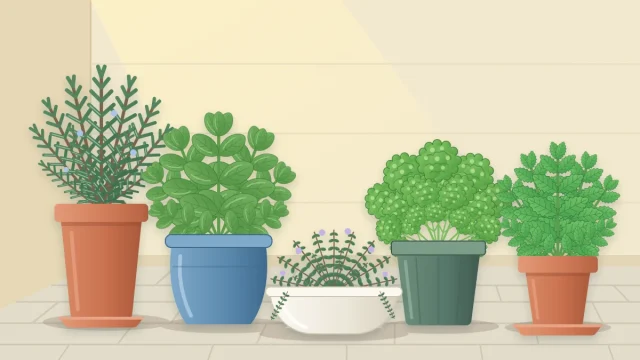
How to Plant a Mixed Herb Pot That Works
Which herbs can share one large pot and which cannot, followed by clear steps for filling, arranging and planting a mixed herb container.
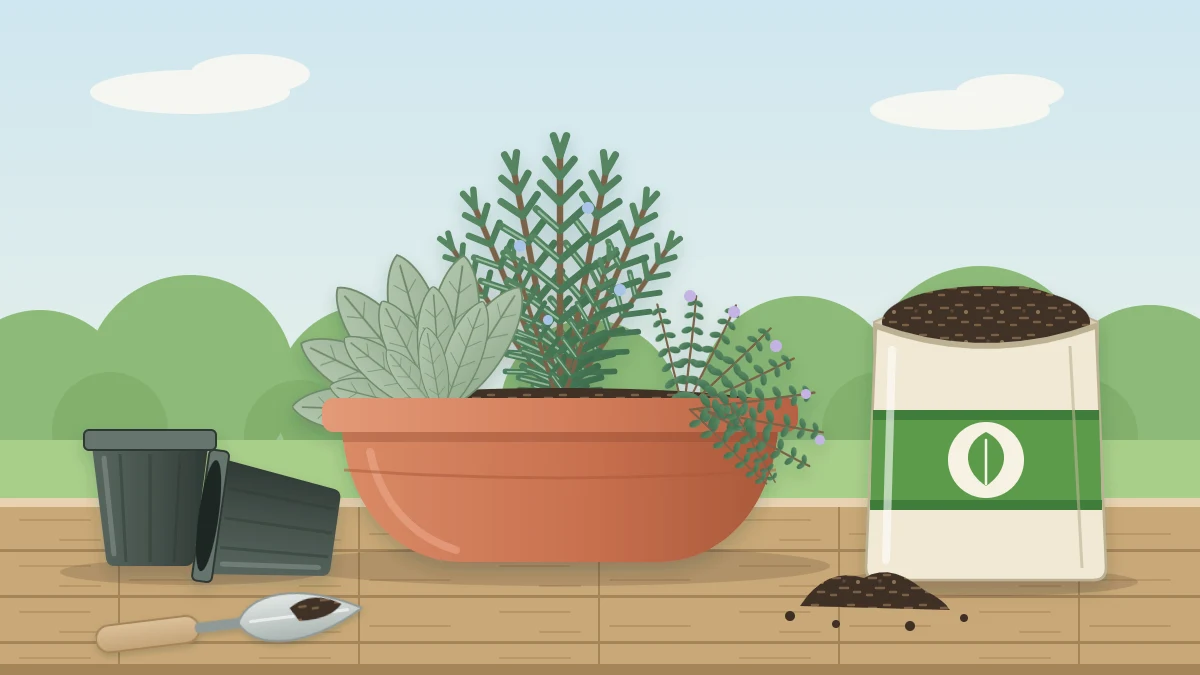
Tutorial at a glance
What you need
- Pot about 14 to 16 in (35 to 40 cm) wide with drainage holes
- Container potting mix
- Mesh or a pot shard
- Hand trowel
- Three or four starter plants
- Watering can
A single large pot with three or four herbs growing together is one of the most satisfying things you can put on a patio. It is also where many beginners run into trouble, because the plants sold side by side at the garden center do not all want the same care. Knowing how to plant an herb container begins with choosing companions that agree with each other.
Once the partners are right, the planting itself takes less than an hour. This guide covers who can share a pot, then walks through the steps.
The rule that decides success
Combine herbs with the same water and soil preferences. Everything in a shared pot gets the same potting mix and the same watering, so a plant that likes to dry out and a plant that likes steady moisture cannot both be content. One of them will always be getting the wrong amount.
Which herbs can share a pot
The common culinary herbs fall into two groups, plus one that belongs alone.
| Group | Herbs | What they share |
|---|---|---|
| Dry-side partners | Rosemary, thyme, sage, oregano | Sharp drainage; mix that dries a little between waterings |
| Moisture-loving partners | Basil, parsley, chives, cilantro | Evenly moist mix that never stays soggy |
| Alone | Mint | Its own pot, always |
A dry-side pot might hold an upright rosemary, a sage and a trailing thyme. A moisture-loving pot might combine basil, parsley and chives. Keep each pot to one group.
Good to know
Plant mint by itself. It spreads by runners that fill a container quickly and crowd out any neighbors, no matter how large the pot looked on planting day.
Remember too that the groups differ in how long they last. Rosemary, thyme, sage, oregano and chives are perennials, while basil and cilantro are annuals that you replace each year, and parsley is a biennial usually grown for one season.
What you need
Choose a pot at least about 14 to 16 in (35 to 40 cm) wide, with drainage holes. That gives three or four herbs room for their roots and holds enough mix that the pot does not dry out in an afternoon. Anything smaller is better kept for a single plant.
You will also need container potting mix, a small piece of mesh or a pot shard, a hand trowel, your starter plants and a watering can. For help choosing pot materials and mix, see the guide to growing herbs in containers.
Look for compact, healthy transplants with no yellowing leaves, and water them in their nursery pots an hour or so before you begin. Moist root balls slide out cleanly and settle in with less stress.
Planting the pot step by step
- Set the pot in place first. A large container full of wet mix is heavy. Position it where it will live, or put it on a wheeled stand, before you fill it.
- Cover the drainage hole. Lay a piece of mesh or a curved pot shard over the hole so the mix stays in and water still gets out. No gravel layer is needed.
- Fill with potting mix. Add container potting mix to a couple of inches (about 5 cm) below the rim. Firm it lightly with your hands, without packing it down.
- Arrange the plants while still in their pots. Put the tallest herb in the center, or at the back if the pot stands against a wall. Place trailing thyme or oregano at the edge, where it can spill over the rim. Leave space between plants for growth.
- Plant at the same depth. Tip each herb out, loosen any circling roots with your fingers and set it so the top of the root ball sits level with the surrounding mix, the same depth as in the nursery pot.
- Fill and firm. Work mix into the gaps between root balls and press gently so there are no hollow pockets.
- Water until it drains. Water slowly and evenly until water runs from the bottom of the pot. Top up any spots where the mix settles.
- Set it in sun. Most herbs want full sun, about six or more hours of direct sun a day.
NC State Extension goes deeper into containers, mixes and drainage in the Extension Gardener Handbook chapter on plants grown in containers.
Arranging for looks and access
A simple layout works best: one tall plant, one or two mounding plants, and one that trails. In a dry-side pot that could be rosemary for height, sage for a rounded shape and thyme at the rim. If you are choosing a thyme, the thyme growing guide describes how its low, spreading habit behaves over time.
In a moisture-loving pot, basil gives the height, parsley fills the middle and chives add upright, grassy leaves at the side. The chives growing guide explains how the clumps thicken and when to split them.
Tip
Resist filling every gap on planting day. A pot that looks slightly sparse at first fills in within weeks, while a crowded one has poor airflow and needs thinning almost at once.
The first few weeks
New transplants have small root systems, so check the mix around them often with a finger until you see fresh growth. Water when the top inch or so (2 to 3 cm) feels dry for moisture-loving herbs, and let dry-side herbs go a little longer. How often that turns out to be depends on the weather, the pot and the plants.
If the transplants came from a sheltered greenhouse bench, harden them off before they face a full day of sun and wind. And if frost is still possible in your area, wait to plant tender herbs such as basil until after your last frost.
Start picking lightly once the plants are clearly growing. Pinching the soft stem tips of basil and oregano encourages branching and keeps the pot bushy.
Keeping a shared pot in balance
A mixed container is not a permanent arrangement. Expect to trim regularly, because the strongest grower will otherwise shade its neighbors. Oregano and sage in particular can spread over smaller plants if left unchecked.
Over a season or two the plants fill the pot. When growth slows, water runs straight through or roots show at the surface, it is time to act:
- Lift and divide clump-forming herbs such as chives, then replant one piece.
- Move a plant that has outgrown the group, often the rosemary, to a pot of its own.
- Replace annuals at the end of their season and refresh the mix around the perennials.
Frequently asked questions
Can basil and rosemary grow in the same pot?
They are a poor match. Basil wants evenly moist potting mix, while rosemary wants sharp drainage and time to dry between waterings. In a shared pot one of them is always getting the wrong amount of water. Give each a pot with partners that like the same conditions instead.
How many herbs fit in one large container?
In a pot about 14 to 16 inches wide, three or four small starter plants is a sensible number. They look sparse at first and fill the space as they grow. More than that leads to crowding, poor airflow and a pot that dries out very quickly once the roots have filled it.
Why is mint not planted with other herbs?
Mint spreads by vigorous runners that travel through the potting mix and come up all over the container. Within a season it can crowd out slower neighbors and tangle its roots through theirs, which makes it hard to separate later. A pot of its own keeps it productive and contained.